Important Points
- this policy control recording for the OneSettings service.
- If enabledWindows logs connection attempts.
- Logs are stored in EventLog Privacy Audit.
- If disabledno connection attempts are recorded.
Hey, let’s talk about how Control One Settings Service Sign in to Windows using Intune. This policy decides whether Windows keeps a record of connection attempts made to One Setup Service. When this setting is tlight upWindows logs every attempt to connect to One Arrangement services in specific Event Viewer channels: Microsoft\Windows\Privacy-Auditing\Operations. This can help administrators monitor system activity and track privacy-related events more effectively.
List of contents
Control One Settings Service Sign in to Windows using Intune
If the policy is turned off or not configuredWindows will do it not making any log entries for this connection attempt. In this case, there will be no records available in EventLog review or audit One Setup service connection.
Policy Creation in Intune
Previously we discussed various aspects of enabling and disabling Screen Saver Lock Timing using Intune Policy. First, log in Microsoft Intune admin center. Then navigate to Device > Configuration > + Create. You will see a window titled Create a Profile.
| Platforms | Profile Type |
|---|---|
| Windows 10 and later | Settings Catalog |
Specify the Policy Name and Description
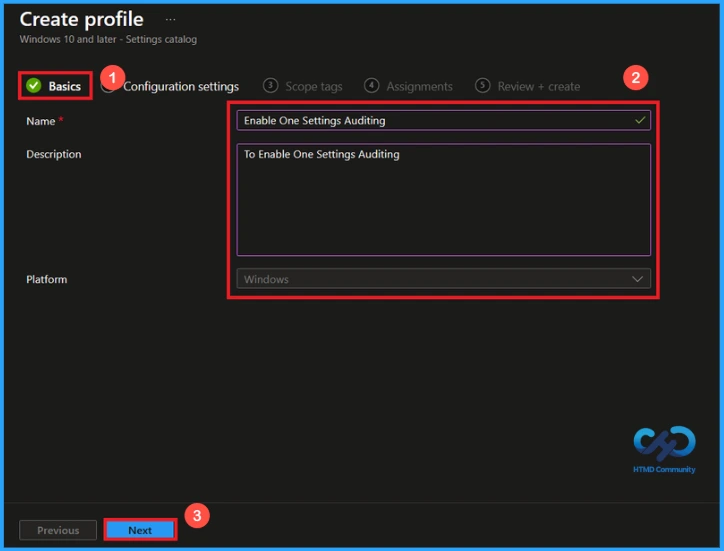
To configure policies in Intune, start with Basic stepsenter the clear and means names like Enable One Setting Audit and provide a brief description (such as “To Enable One Setting Audit“). Then click Next to continue.

Configure One Setting Audit
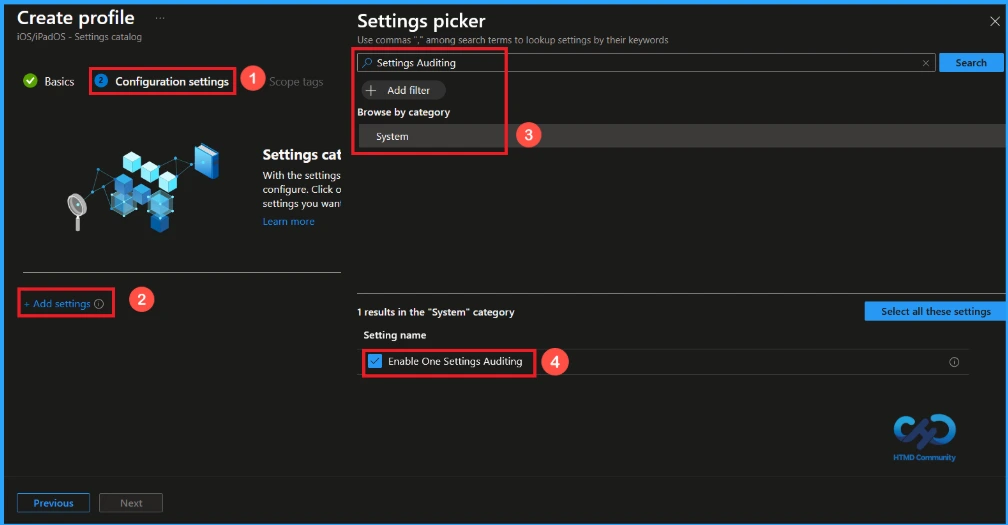
In Configuration settingsYou can see Add settings knob. Click Add Settings to browse or search catalog for the settings you want to configure. In Settings selectorYou can search Arrangement quickly. Here, I choose System category, select Enable One Setting Audit to configure it, then close the Settings Picker window.
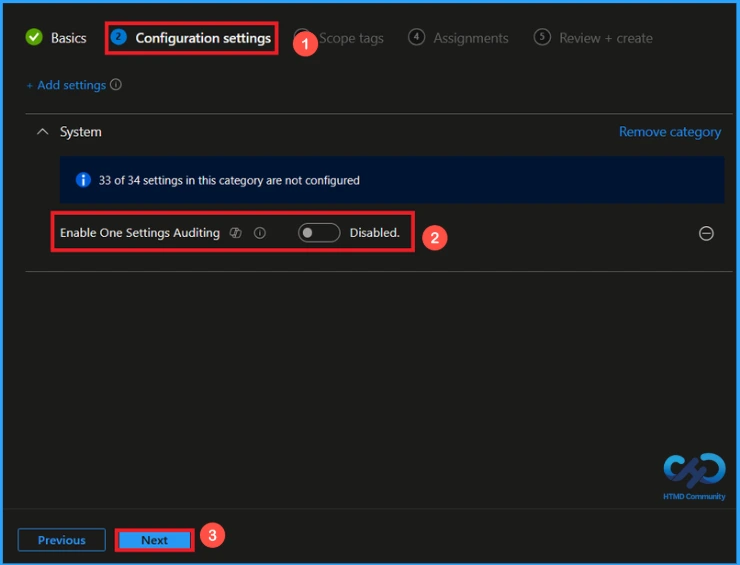
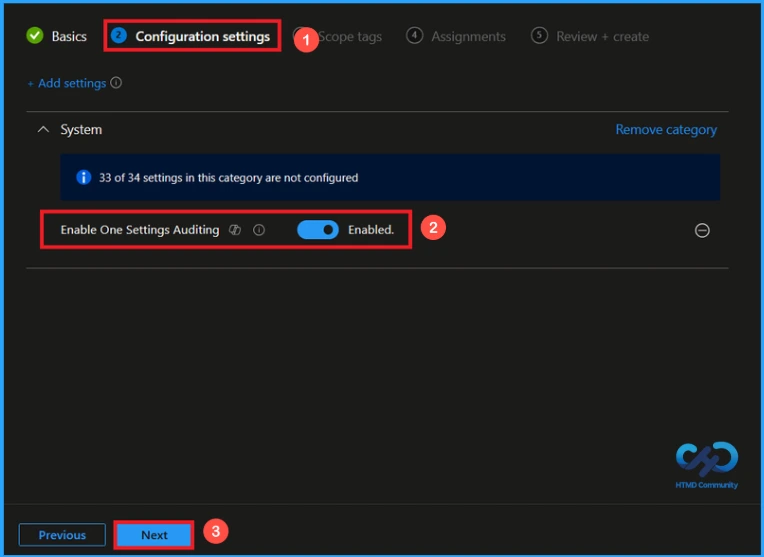
Once you select Audit One Setting and close the Settings selector. You will see it in Configuration page. This setting is disabled by default. If you want to continue, you can click next.
Enable One Setting Audit
If we possible or configure this policy, you can allow the One Setting Audit policy toggle the switch from left to right. Then, you can click Next button to continue.
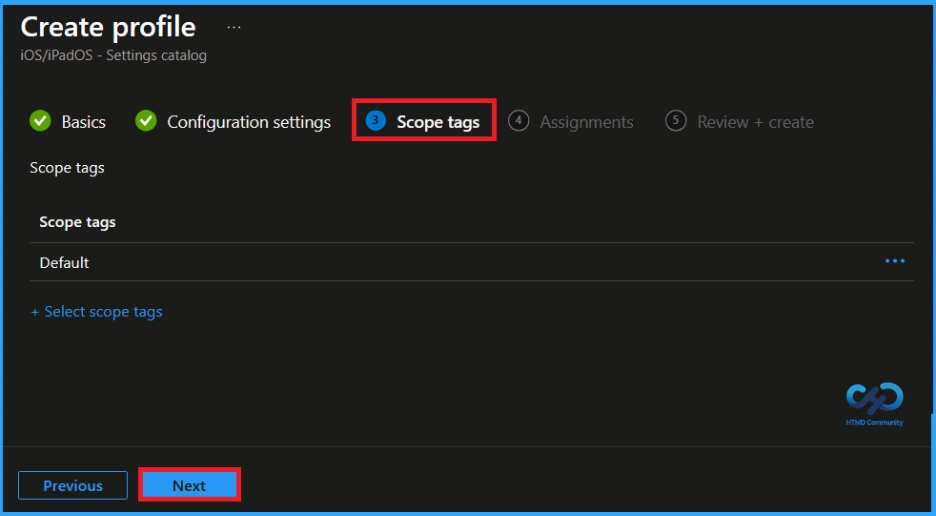
Scope tags are used to control which ones administrator can view and manage these policies in the Intune admin center. In the Coverage tags section, you can assign one or more scope tags to a policy so that only certain IT teams or administrators have access to the policy. To add a scope tag, click Select scope tag, select the required tag, then click Next.
Assign Policies to Groups
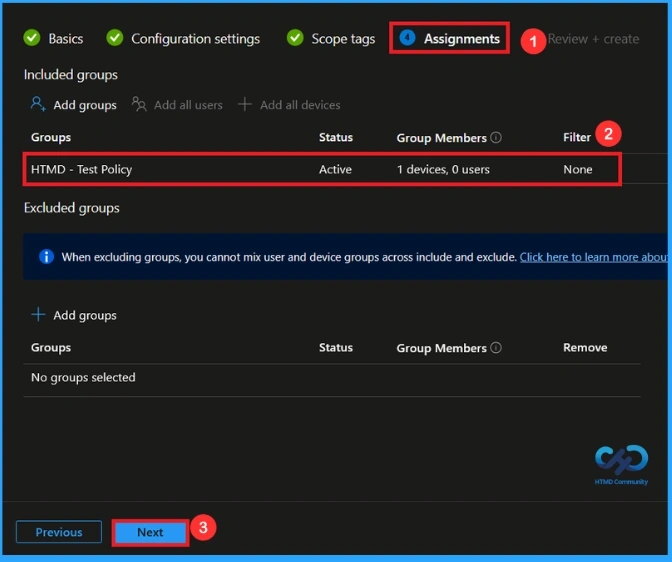
In Task section, click Add group below Including groups and select the required user group or device. Setting a policy ensures it is applied only to the intended user or device, such as test group or production environment. Then click on Next.
Review and Implement Policies
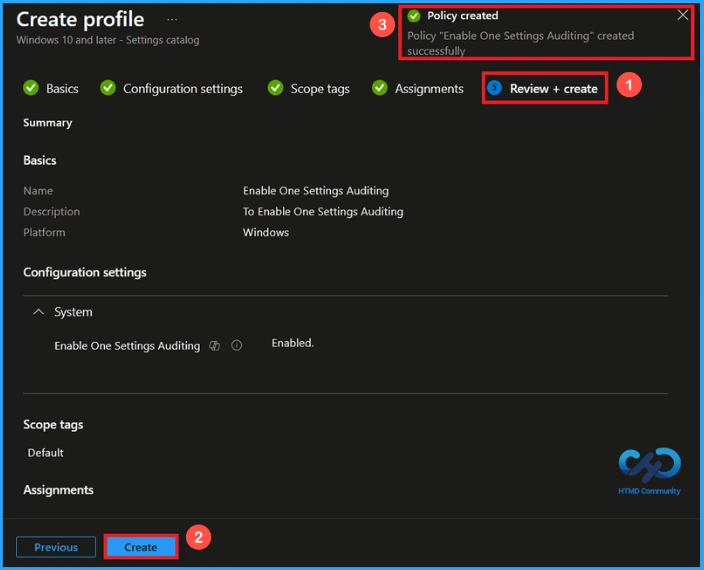
In the final Review + Create step, we see a summary of all the settings configured for the new profile; after reviewing the details and making the necessary changes by clicking Previously. We clicked Create to finish, and a notification confirmed that “Enable Audit One Setting successfully created”.
Monitor Policy Implementation Status
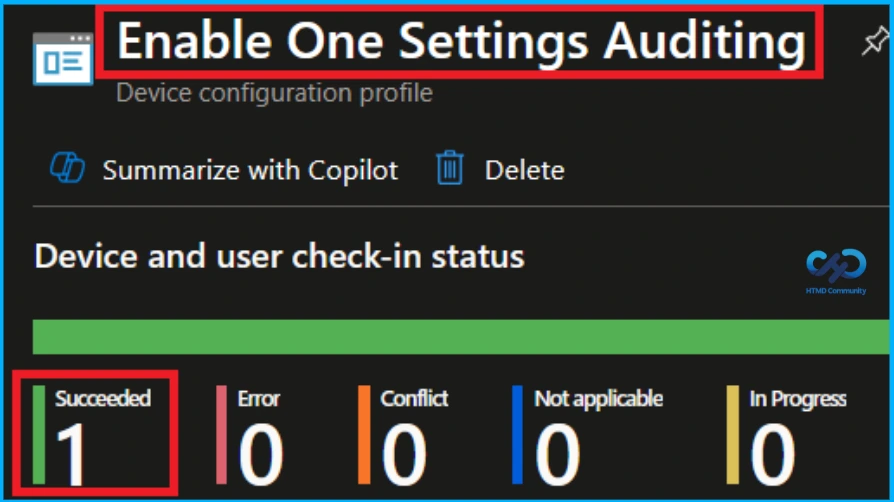
To check whether the policy was applied successfully, go to Microsoft Intune admin center and go to Device > Configuration profile. Choose One Setting Audit Policy from the list. This will open the policy overview page, where you can see a brief summary of its implementation status.
Client Side Verification
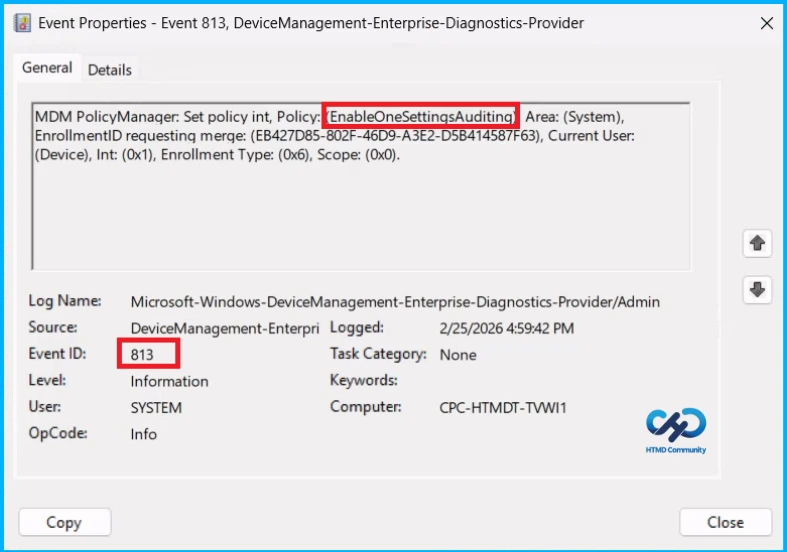
To confirm whether a policy has been implemented, use Event Viewer on the client device. Go to Applications and Services Log > Microsoft > Windows > Device Management > Enterprise Diagnostics Provider > Admin. Use Current Log Filter choice and search Intune Event 813.
MDM Policy Manager: Set policy int, Policy: EnableOneSettingsAuditing Area: (System),
Registration request: (EB427D85-802F-46D9-A3E2-D5B414587F63), Current User:
(Device), Int: (0x1), Registration Type: (0x6), Scope: (0x0).
How to Remove an Assigned Group from a Single Settings Audit Policy
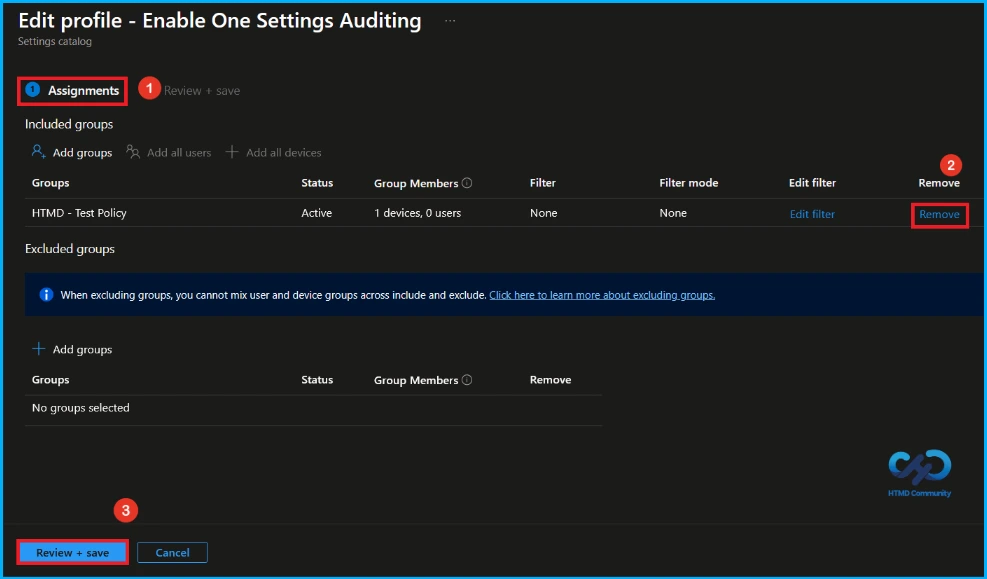
If you want to stop a policy from being applied to specific users or devices, you can delete the assigned group. Go to Device > Configuration profile, select policies, and go to Tasks. Under Included groups or Excluded groups, select the group you want delete and remove it from the to-do list. Once a group is deleted, the policy no longer applies to that user or device thereafter next Intune sync.
For more information, you can refer to our previous post – Learn How to Delete or Unassign Apps from Intune using Step by Step Guide.
How to Remove One Setting Audit Policy from Intune
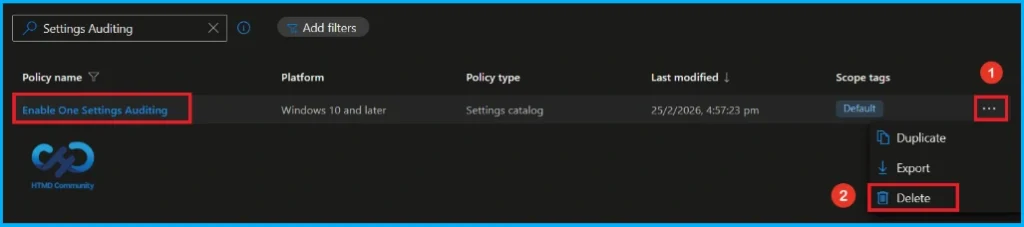
If the policy is no longer needed, you can delete it’s completely from Intune. Navigate to Device > Configuration profile, select the policy you want to delete, and click Delete. Confirm the deletion when prompted. Delete a policy permanently remove it from Intune and stop it from being applied to all devices.
For more information, you can refer to our previous post – How to Remove Allow Clipboard History Policy in Intune Step by Step Guide.
Windows Configuration Service Provider (CSP)
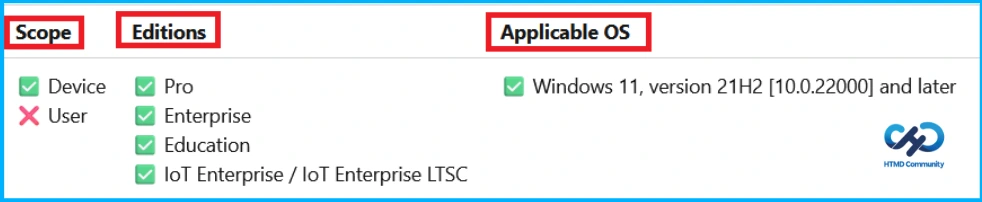
Policy Configuration Service Provider (CSP) is a feature used by organizations to manage and control settings on Windows 10 and 11 devices. It describes what each policy does, its settings or what values can be used, and how it connects to older Group Policy settings (Group Policy Mapping Details).
| Mark | Information |
|---|---|
| 0 (Default) | Disabled |
| 1 | Possible |
Description of framework properties
- Format – Int
- Access type – Add, Delete, Get, Replace
- Default value – 0
Group Policy Mapping
| Name | Mark |
|---|---|
| Name | Enable OneSettingsAuditing |
| Friendly Name | Enable OneSettings Audit |
| Location | Computer Configuration |
| Track | WindowsComponents > Data Collection and Preview Generation |
| Registry Key Name | Software\Policies\Microsoft\Windows\DataCollection |
| ADMX File Name | DataCollection.admx |
Need More Help or Have a Technical Question?
Join LinkedIn Page And Telegram Group to get step by step guides and latest news updates. Join us Meet Page to participate in User group meetings. Also, Join WhatsApp Community And WhatsApp Channel to get the latest news about Microsoft Technologies. We were there RepeatDhe as well.
Author
Anoop C Nair has been Microsoft’s MVP from 2015 onwards for 10 years in a row! He is a Workplace Solutions Architect with over 22+ years of experience in the Workplace technology space. He is also a Blogger, Speaker, and Local User Group Community leader. The main focus is on Device Management technologies such as SCCM and Intune. He writes about technologies like Intune, SCCM, Windows, Cloud PC, Windows, Entra, Microsoft Security, Career, etc.
PakarPBN
A Private Blog Network (PBN) is a collection of websites that are controlled by a single individual or organization and used primarily to build backlinks to a “money site” in order to influence its ranking in search engines such as Google. The core idea behind a PBN is based on the importance of backlinks in Google’s ranking algorithm. Since Google views backlinks as signals of authority and trust, some website owners attempt to artificially create these signals through a controlled network of sites.
In a typical PBN setup, the owner acquires expired or aged domains that already have existing authority, backlinks, and history. These domains are rebuilt with new content and hosted separately, often using different IP addresses, hosting providers, themes, and ownership details to make them appear unrelated. Within the content published on these sites, links are strategically placed that point to the main website the owner wants to rank higher. By doing this, the owner attempts to pass link equity (also known as “link juice”) from the PBN sites to the target website.
The purpose of a PBN is to give the impression that the target website is naturally earning links from multiple independent sources. If done effectively, this can temporarily improve keyword rankings, increase organic visibility, and drive more traffic from search results.