Today we discuss how configure BranchCache for network files uses Intune policies. BranchCache is a Windows feature that helps improve file access speed in branch office by storing content locally that users download from the server located in the main office.
When another user on the same branch requests the same file, the file is fetched from the local cache download more from WEAKwhich saves time and reduces network traffic. Configuring BranchCache helps organizations improve efficiency and performance.
This ensures that the user is on the remote or branch location can access shared files quickly, even when the network connection to the main office is slow or has high latency. This improves the overall user experience and reduces delays in daily work. If the policy is set to Enabled, BranchCache maximum The round-trip latency setting is enabled for all client computers based on the policy.
Conversely, if the policy is Disabled, BranchCache the client computer returns to the default latency setting of 80 milliseconds. This means caching will start after latency exceeds 80 ms, unless configured locally.
How does this Policy Benefit the organization?
Configuring BranchCache helps organizations improve efficiency and performance.
This ensures that users at remote locations or branches can access shared files quickly, even when the network connection to the main office is slow or has high latency.
Configure BranchCache for Network Files using Intune Policies
This policy helps employees work without delays and improvements productivityespecially in locations with limited internet bandwidth. Using Intune policies, administrators can easily deploy and manage BranchCache settings. They can determine how and when caching is initiated, set latency values, and ensure consistent configuration across client computers on the network.
Real Word Examples – Corporate Office Environment
The main purpose of this policy is to control when client computers in branch offices start caching content based on network latency, which refers to the delay that occurs when transferring data between the branch office and the main office.
- A bank with Lots branches use BranchCache so employees can fast access policy documents and report without being continuous download from the main data center.
- A retail chain with stores across the country uses BranchCache to speed up access to daily sales reports and inventory updates, improve operations efficiency.
Create a Profile First
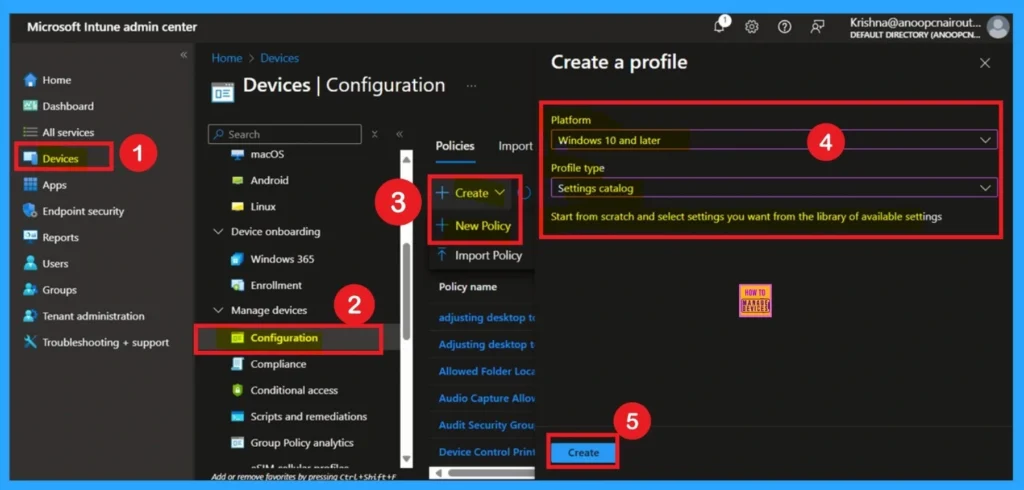
First you need to do it configure this policy. Start by going to Microsoft Intune Admin Center. Then, click Devices. Under Device section, go to the Configuration tab, where you will find a + Create choice. Click on it, and you will see it 2 choices, such as new policies and Import policies.
- Choose new policy, and this will open a new window titled Create a profile.
- Here, you have to enter Platforms And Profile type details.
- After that, click Make.
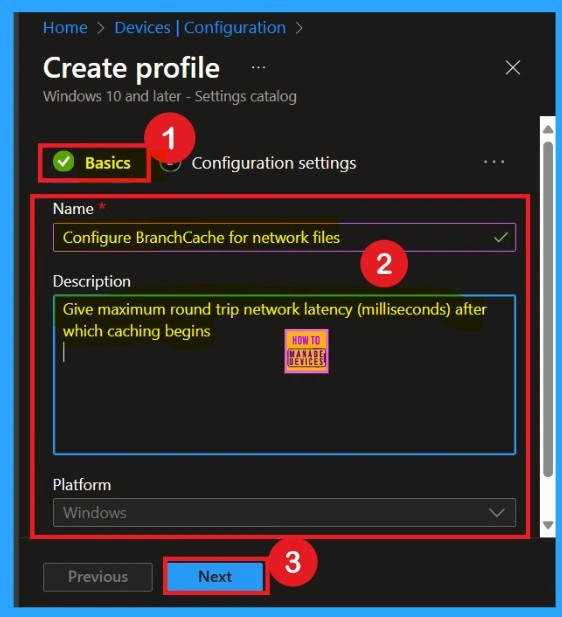
What is Basic Tab
The Basics tab is fastest step. Here, you need to enter basic details like NameDescription, and Platform information. Since the platform is already set to Windows, you just need to provide a specific name and description for the policy, then click Next.
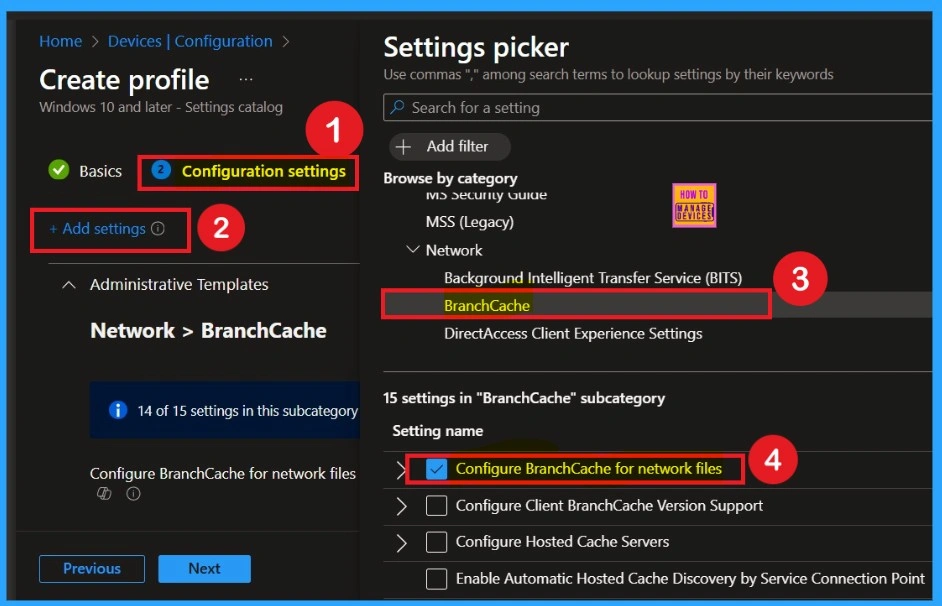
Know the Settings Selector
After finishing basic stepsYou will now enter the Configuration Settings section. Here, click on Add Settings option and it will open Settings Selector window. From the administrative templates select Network and then select BranchCache. Under BranchCache options, select Configure BranchCache for network files.
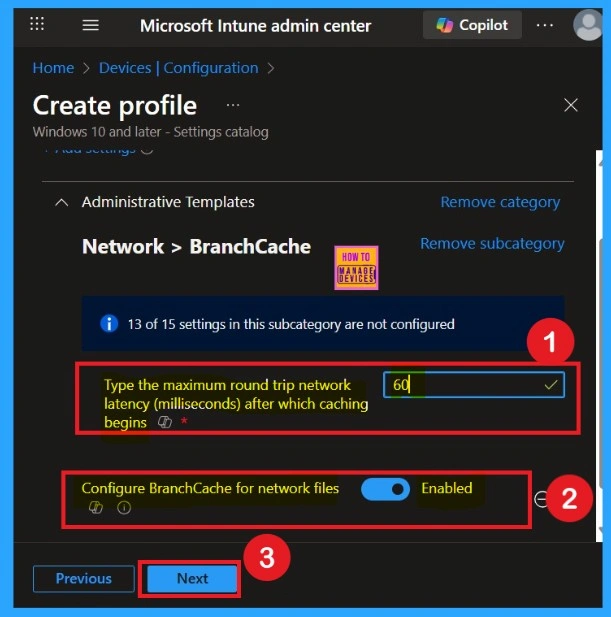
Enabled Mode
You can also enable policies that are disabled by default. To do this, switch the buttons from left to right. Once activated, the switch will turn blue and display a label Enabled. Then you can see another text box named Type the maximum round trip network latency (milliseconds) after caching starts.
- I added maximum round trip network latency 60
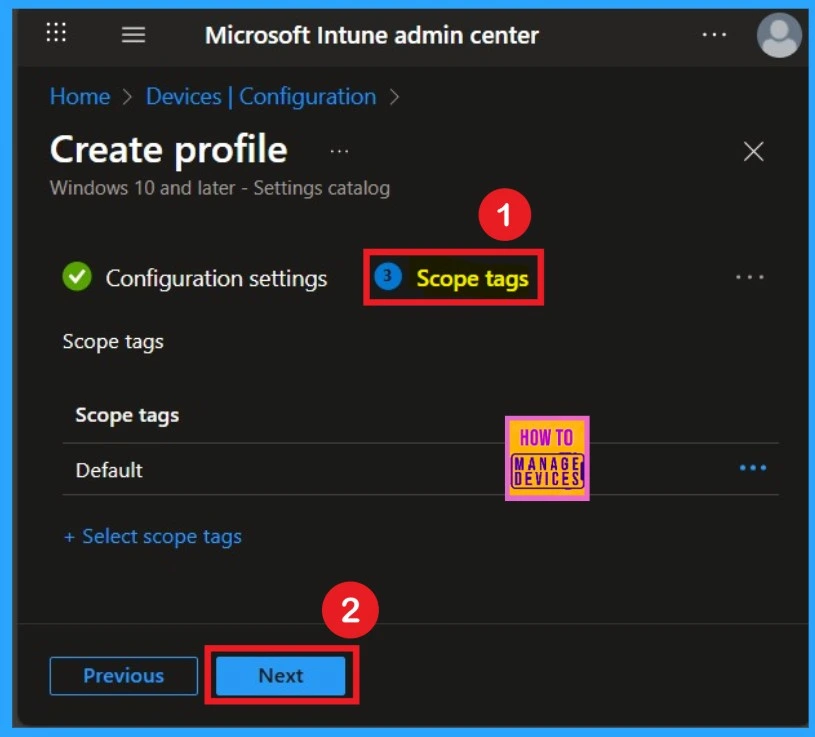
Now you are in the Coverage tags section. Coverage tag used to assign policies to specific admin groups for better management and filtering. If needed, you can add scope tags here. However, for this policy, I voted for it pass this part
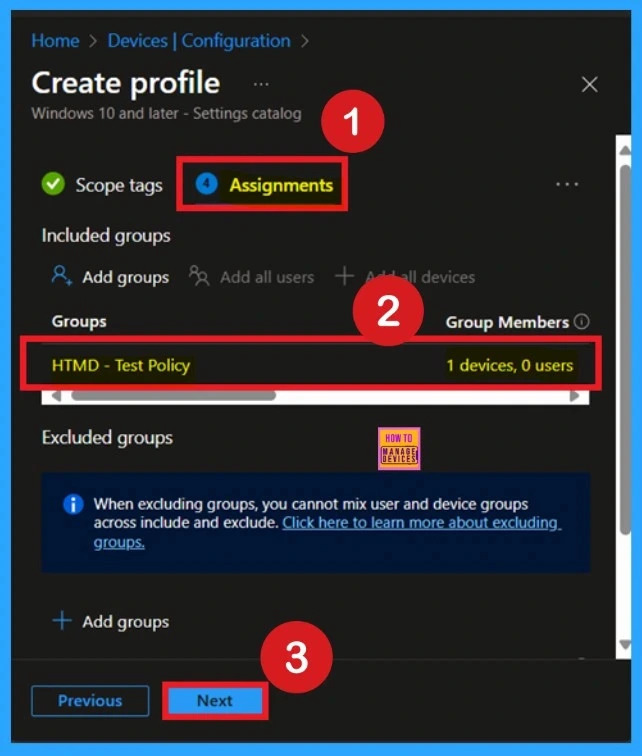
Tasks Tab for Selecting Groups
To assign policies to specific groups, you can use Tasks Tab. Here I click, +Add group option under Included groups. I select a group from the group list and click Choose knob. Again, I click on Choose button to continue.
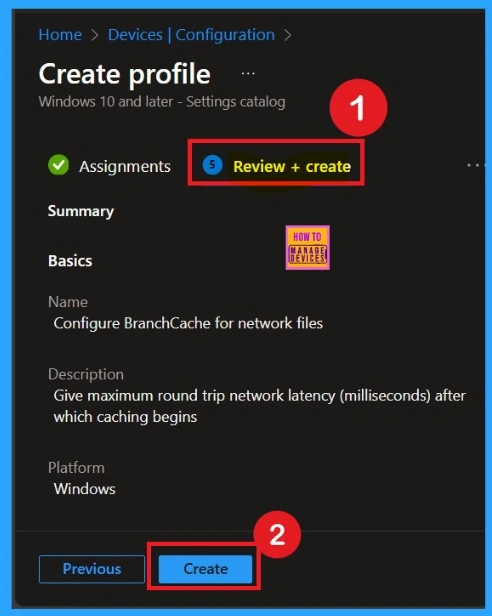
Review + Create Tab
Before completing policy creation, you can review each tab to avoid misconfiguration or policy failure. After verifying all the details, click Make Knob. After creating the policy, you will get a success message.
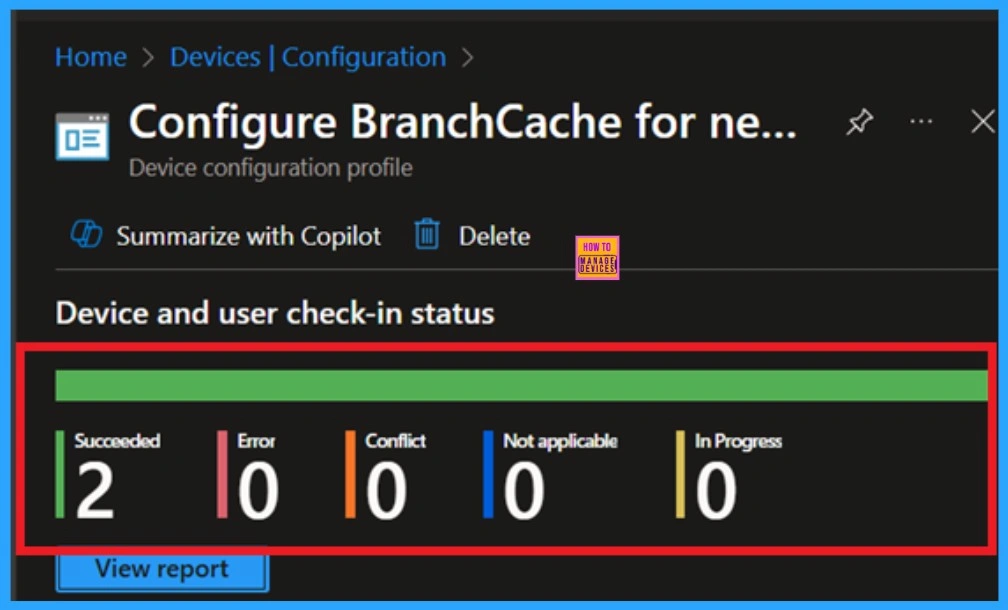
Monitoring Details
Using this method ensures more policies are implemented quickly and you can confirm the results without waiting for the full synchronization time. To check Monitoring status follow the steps;
- Navigate to Device > Configuration Policy.
- In Configuration Policy register, search for the policy you created.
- Click on a policy to view it implementation status and details.
Client Side Verification via Event Viewer
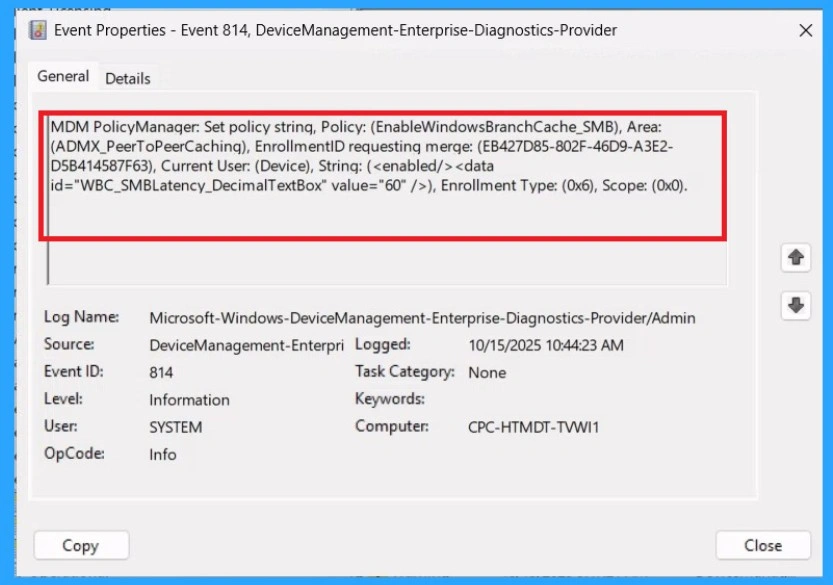
This helps you check the client side and verify the policy status. Go to the Client device and open the Event Viewer. Go to Start > Event Viewer. Navigate to Logs: In the left pane, open Application and Service Logs > Microsoft > Windows > Enterprise-Device Management-Diagnostics Provider > Admin.
| Policy Details |
|---|
| MDM Policy Manager: Set policy string, Policy: (EnableWindowsBranchCache_SMB), Area: (ADMX_PeerToPeerCaching), Registration ID request merchandise: (EB427D85-802F-46D9-A3E2- D5B414587F63), Current User: (Device), Strinq: (), Registration Type: (0x6), Coverage: (0x0). |
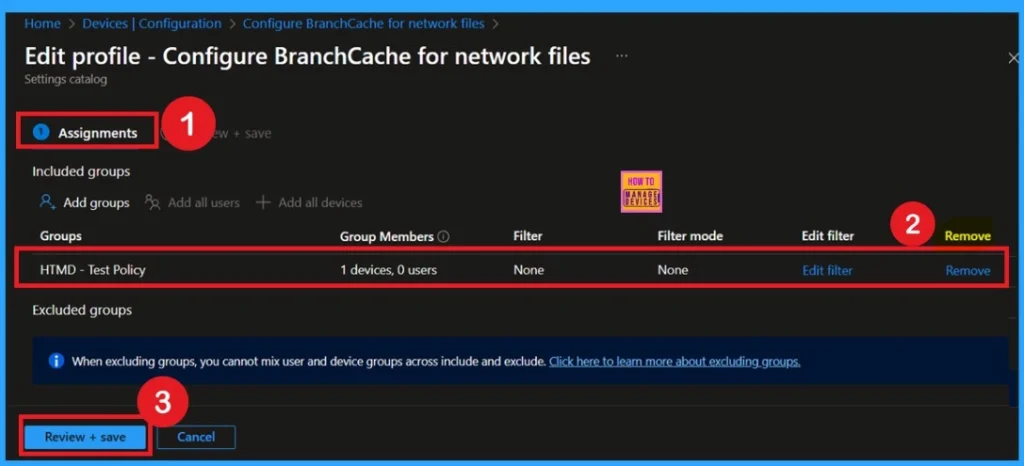
Delete Assigned Policy Group
Removing a group from a policy is very simple. First, go to Monitoring status page and scroll down until you see Edit Assignment choice. Click on it, and you’ll be taken directly to the Tasks section you previously configured. Here, you will find Delete choice.
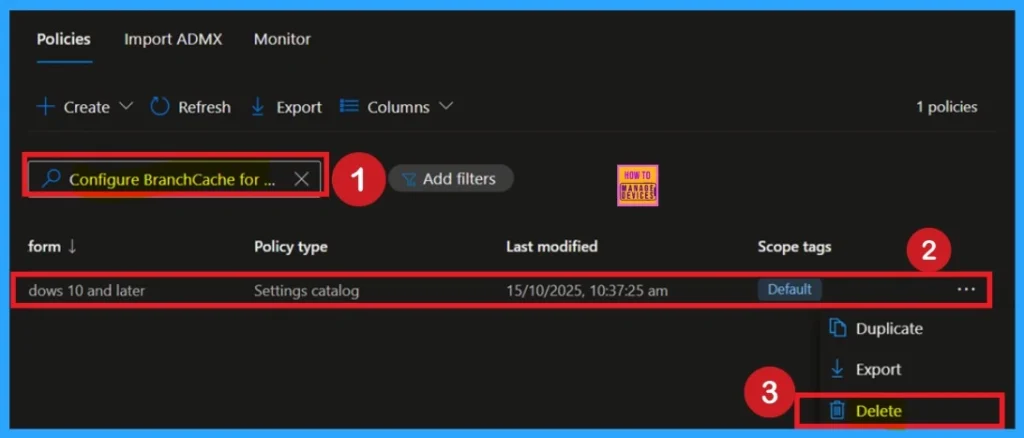
How to Delete a Policy You Created
To delete a policy in Microsoft Intune, first go to Microsoft Intune Admin Center. Navigate to Devices and select it Configuration. Search for and select the specific policy you want delete. Once you are on the policy details page, click 3 dot menu in the top right corner and select Delete from the available options.
Need More Help or Have a Technical Question?
JoinLinkedIn Page AndTelegram groupto get step by step guides and news updates. Join usMeeting Pageto participate in User group meetings. Also, JoinWhatsApp Communityto get the latest news about Microsoft Technologies. We were thereredditas well.
Author
Anoop C Nairhas been a Microsoft MVP for 10 consecutive years from 2015 onwards. He is a Workplace Solutions Architect with over 22+ years of experience in the Workplace technology space. He is a leader of the Community of Bloggers, Speakers, and Local User Groups. The main focus is on Device Management technologies such as SCCM and Intune. He writes about technologies like Intune, SCCM, Windows, Cloud PC, Windows, Entra, Microsoft Security, Career, etc.
Game Center
Game News
Review Film
Berita Olahraga
Lowongan Kerja
Berita Terkini
Berita Terbaru
Berita Teknologi
Seputar Teknologi
Berita Politik
Resep Masakan
Pendidikan
Berita Terkini
Berita Terkini
Berita Terkini
review anime
Gaming Center
Originally posted 2025-10-26 11:48:20.