Key Points:
- Helping to Risk of Resource Exhaustion
- IT admin monitors and mitigates resource exhaustion scenario
- Increase servers stability and reduce downtime
- Confirm the server protected in hybrid and cloud environments
Let’s discuss How to Protect a Server from Running Out of Resources Using Intune. The How to Protect Servers from Resource Exhaustion policy is a special network hardening configuration designed to provide more granular control over Windows TCP/IP stack rather than the standard out-of-the-box settings.
List of contents
How to Protect a Server from Running Out of Resources Using Intune
This setting is decisive several times maximum The Windows TCP/IP stack will retransmit individual data segments (packets) that have not yet been delivered recognized by the recipient before deeming the connection “dead” and terminating it.
Example Scenario
High frequency trading companies make this possible and regulate it 3. Since their network is very stable, any packet loss that occurs during 3 retries indicates a true failure. By disconnecting early, their automated system can trigger a failover to a secondary site 30 – 60 seconds faster than the default Windows behavior, potentially saving millions of “stuck” trades.
Configure Policies with Intune Admin Center
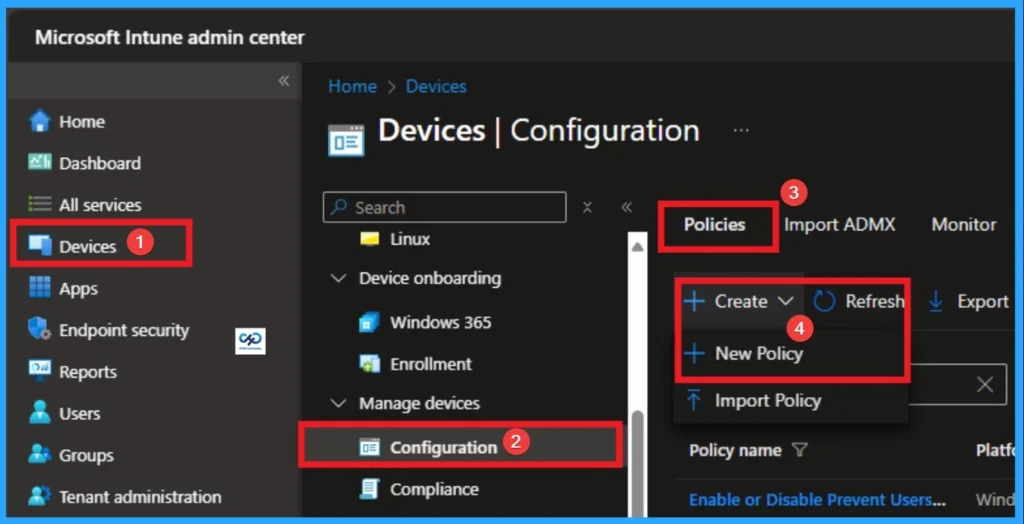
To start Split Screen in Microsoft Edge policy creation, sign in with the Microsoft Intune Admin center. Go to Devices > Configuration > +Create >+ New Policy. Take a look at the screenshot below.
Create a Profile
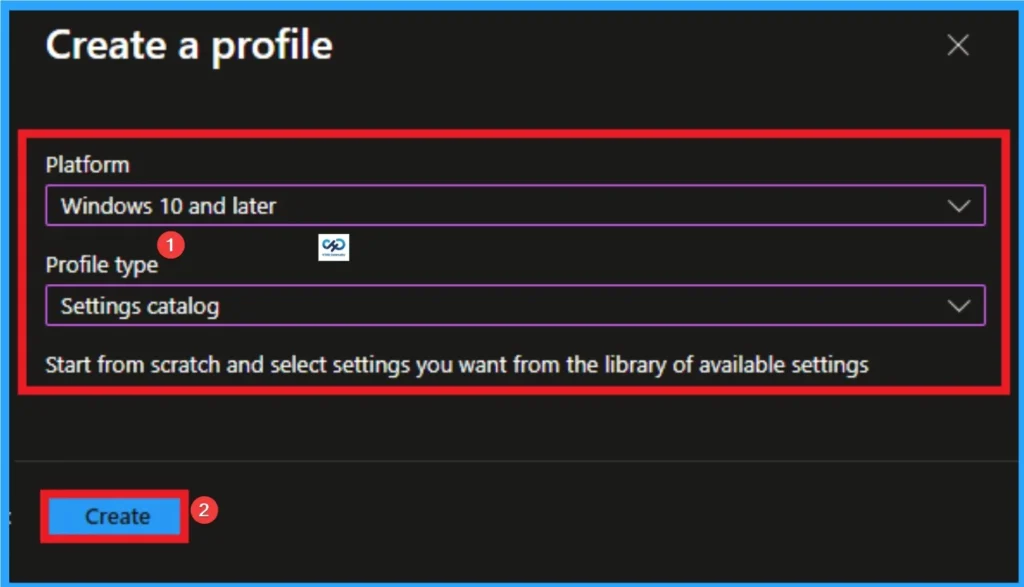
Create a Profile is the next step after clicking the Create button. In this step you can select the platform and profile type. Here I want to configure the policy to be Windows 10 and newer platform catalog profiles and settings. Then click on Make knob.
Initial step
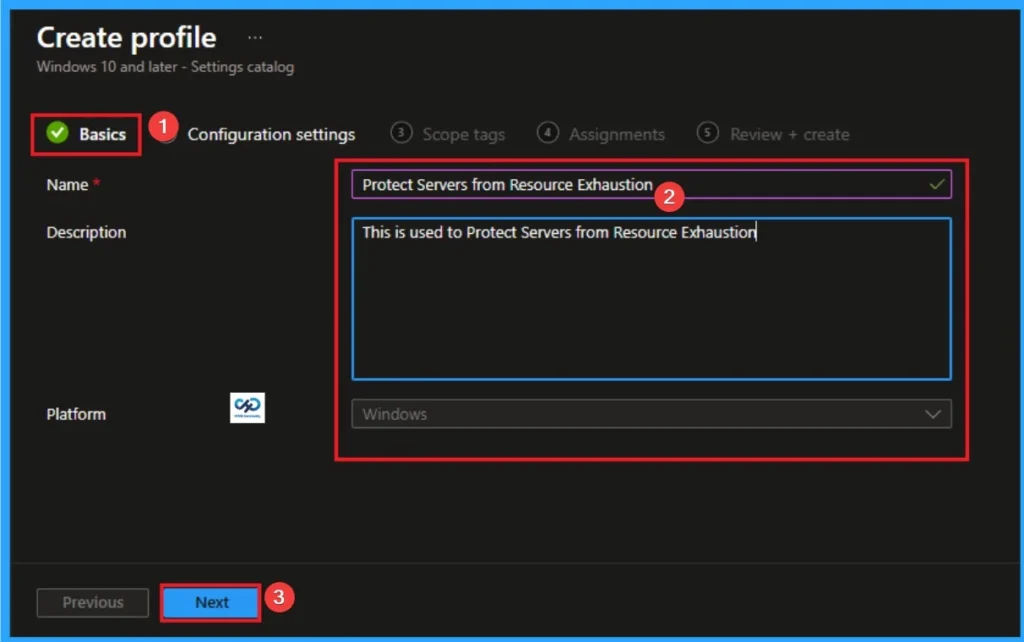
Basic Tab is the first tab used to add a policy Name and Description. This is a very important step that gives identity to your policy. Here Name is Mandatory and Information is optional. After adding this, click on Next knob.
Configure Protect Servers from Resource Exhaustion
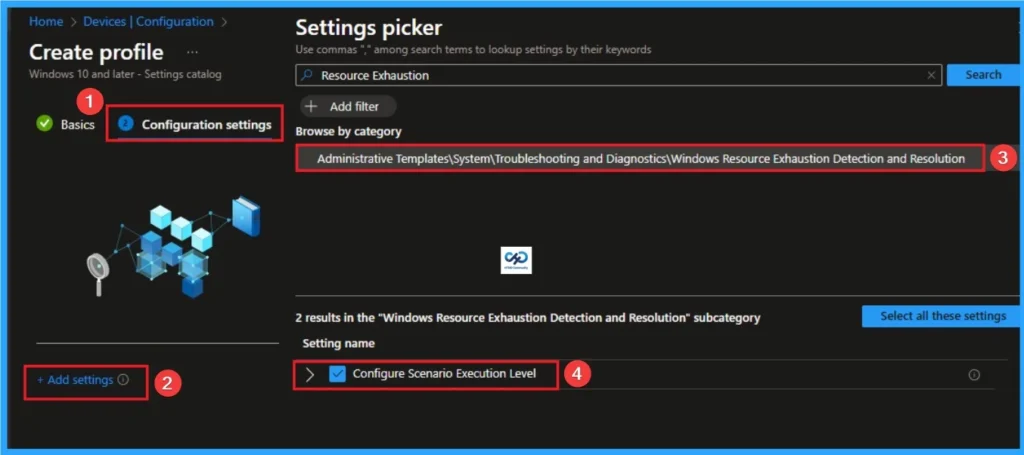
From the Configuration Tab, you can see +Add settings hyperlink to access certain settings. When you click on this hyperlink, you will get the Settings Picker. Here, I want to select settings by browsing by Category. I choose Administrative Templates > System > Troubleshooting and Diagnostics > Windows Resource Exhaustion Detection and Resolution Settings.
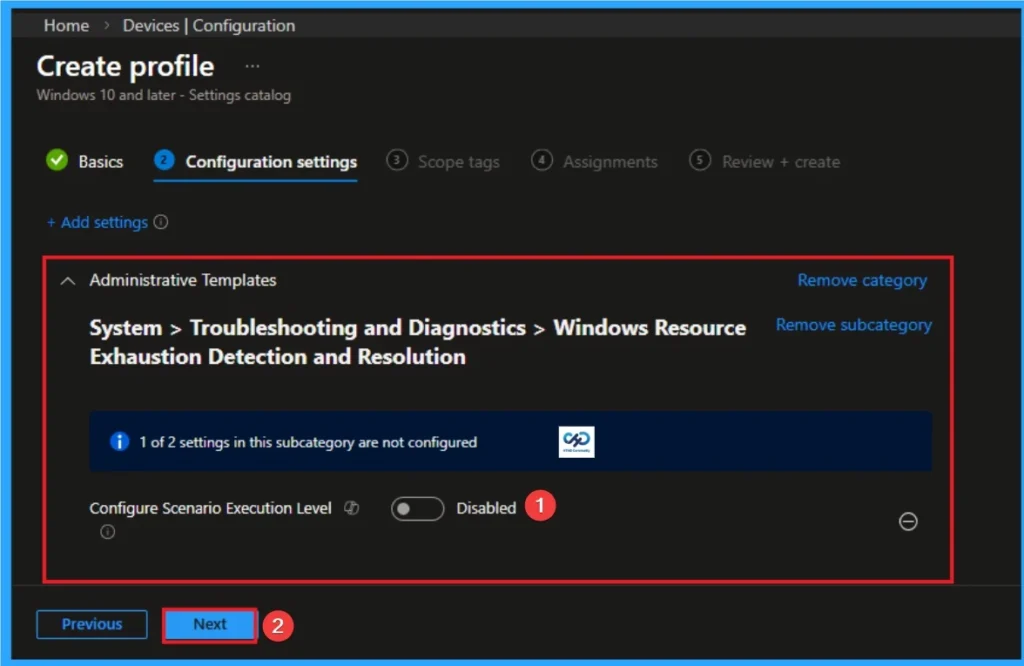
Disable Protect Server from Resource Exhaustion
If you disable this policy setting, Windows will not be able to detect, solve the problem or resolve Windows Resource Exhaustion issues addressed by DPS. This is default valuee of this policy.
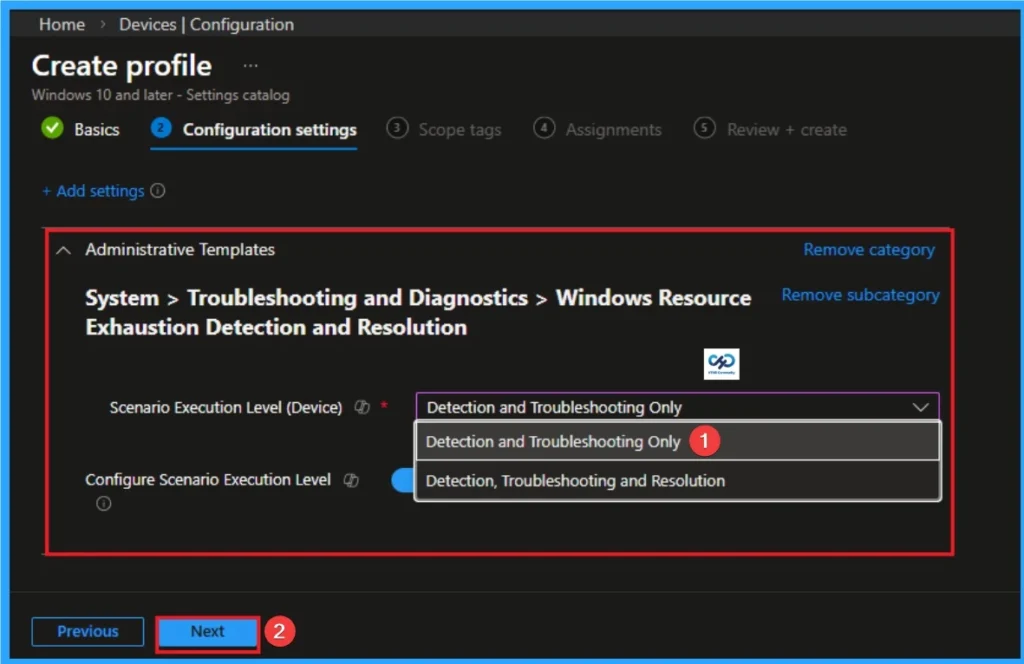
Enable Protect Server from Resource Exhaustion
If you enable this policy setting, you must choose execution level from the drop-down menu. If you choose problem detection and problem solving onlyThat Diagnostic Policy Services (DPS) will detect Windows Resource Exhaustion issues and attempt to determine the root cause.
This root cause would have been logged to the event log when detected, but it is not corrective action will be taken. If you choose detection, troubleshooting, and resolutionDPS will detect Windows Resource Exhaustion issues and indicate to users that assisted resolution is available.
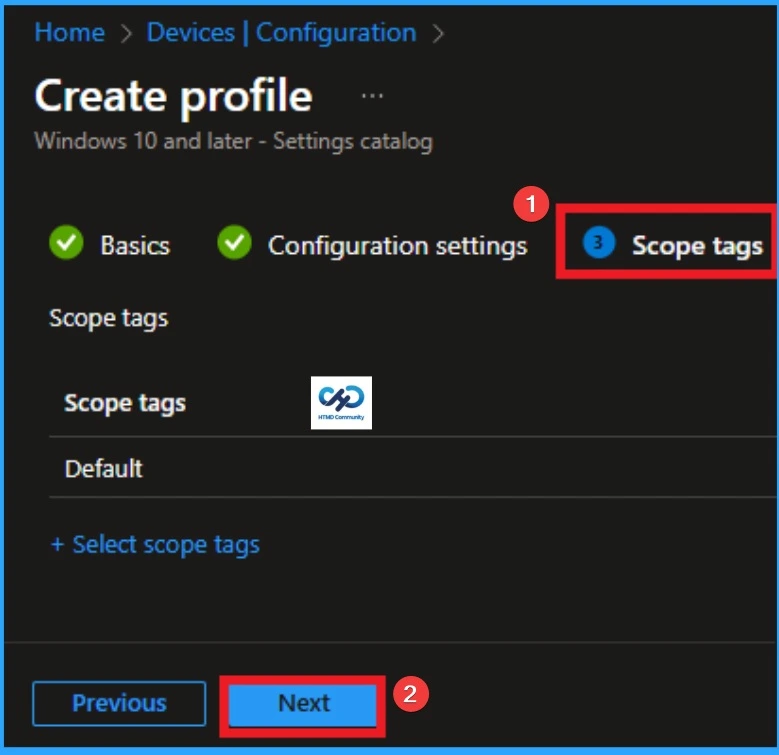
Added Scope Tag
Scope Tag section helps you add restrictions to the Policy’s visibility. But this is not a mandatory step, so you can skip this step. Here, I didn’t add the scope tag for Protect Servers from Resource Exhaustion Policy. Click on Next knob.
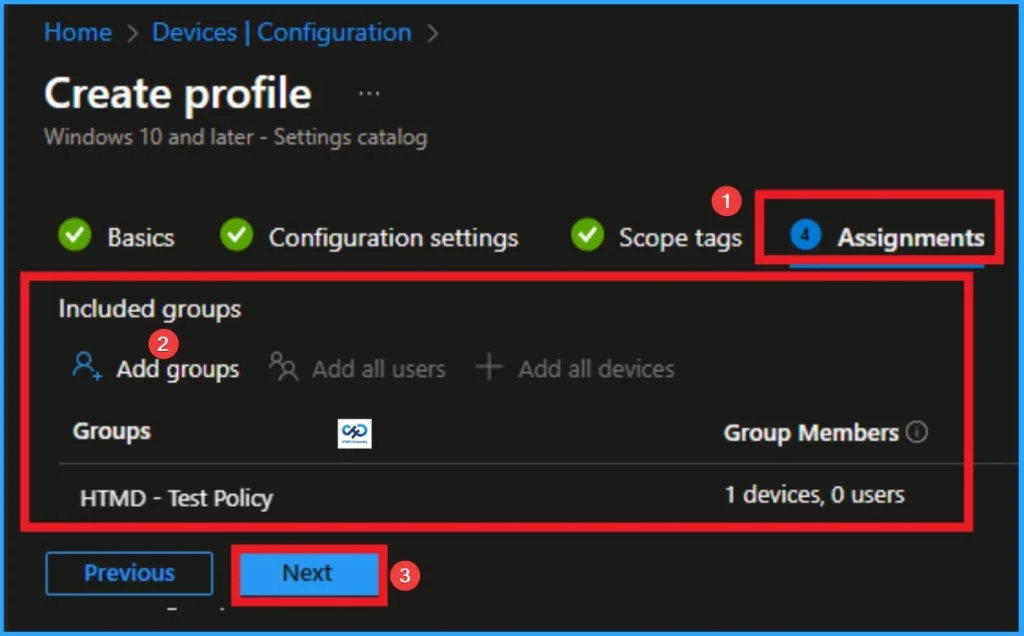
Select Groups from the Assignments Tab
To assign policies to specific groups, you can use Tasks Tab. Here I click, +Add group option under Included groups. I select a group from the group list and click Choose knob. Again, I click on Choose button to continue.
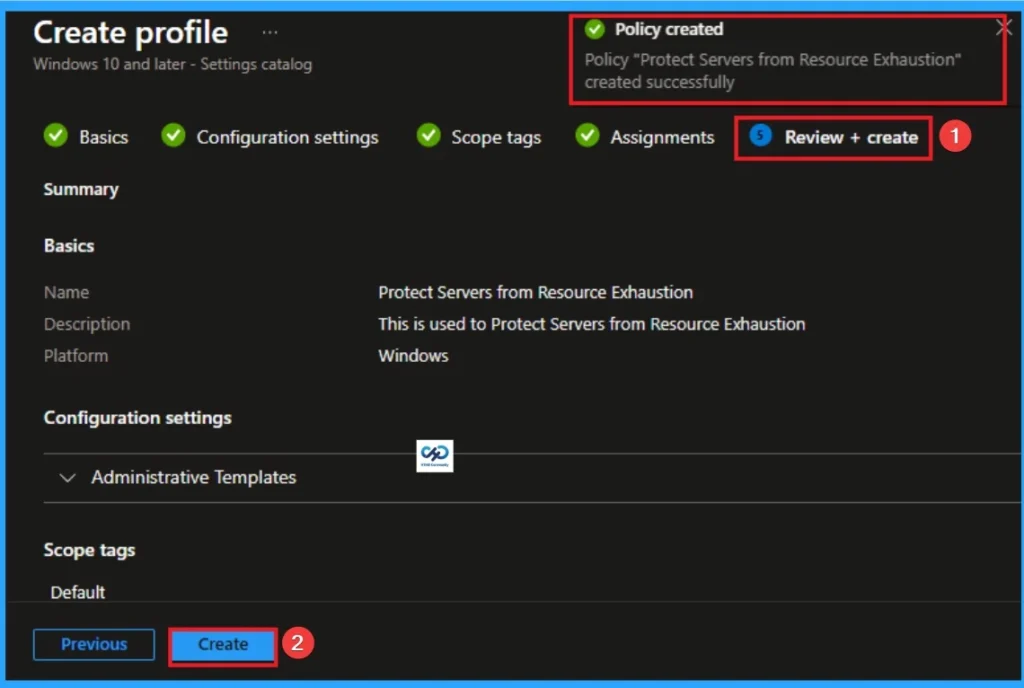
Review + Create Tab
Before completing policy creation, you can review each tab to avoid configuration error or policy failure. After verifying all the details, click Make Knob. After creating a policy, you will get a success message.
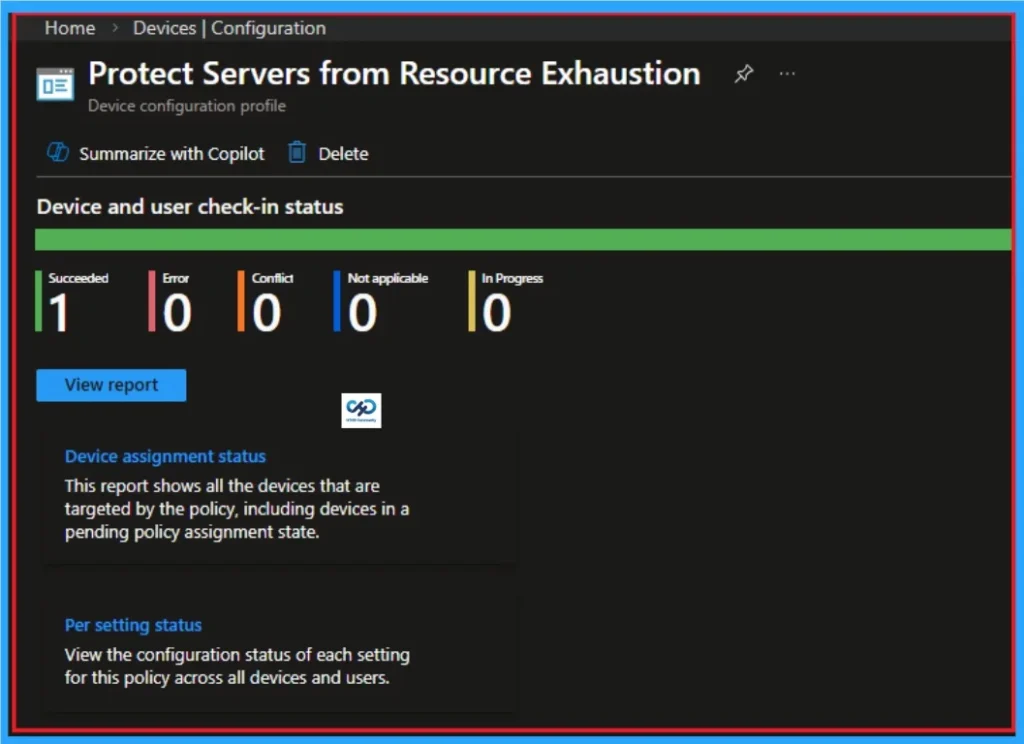
Monitoring Status
That Monitoring Status the page shows whether the policy was successful or not. To quickly configure policies and take advantage of policy synchronization, devices in Enterprise Portal, Go to Intune Portal. Go to Devices > Configuration > Search Policies. Here, the policy is shown as succeed.
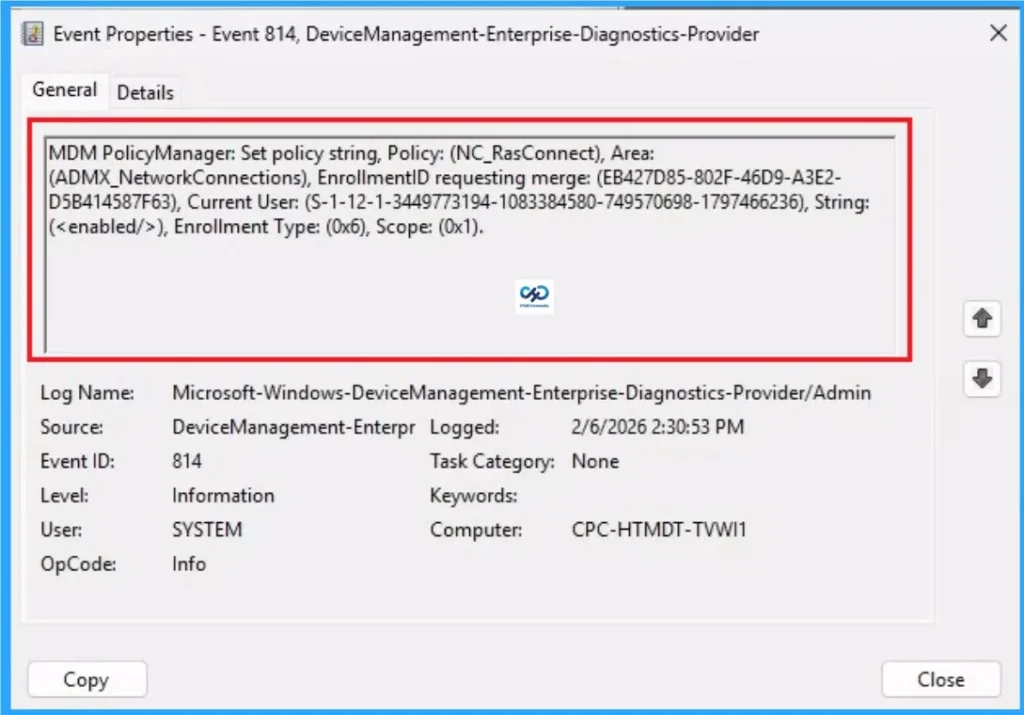
Event Viewer
This helps you check the client side and verify the policy status. Go to the Client device and open the Event Viewer. Go to Start > Event Viewer. Navigate to Logs: In the left pane, open Application and Service Logs > Microsoft > Windows > Enterprise-Device Management-Diagnostics Provider > Admin.
- You will get a successful result in Event ID 814
| Event ID details |
|---|
| MDM Policy Manager: Set policy string, Policy: (NC_RasConnect), Area: (ADMX_NetworkConnections), Registration ID requesting merge: (EB427D85-802F-46D9-A3E2- D5B414587F63), Current User: (S-1-12-1-3449773194-1083384580-749570698-1797466236), String: (), Registration Type: (0x6), Scope: (0x1). |
Delete an Assigned Group from Protect Server from Resource Exhaustion Settings
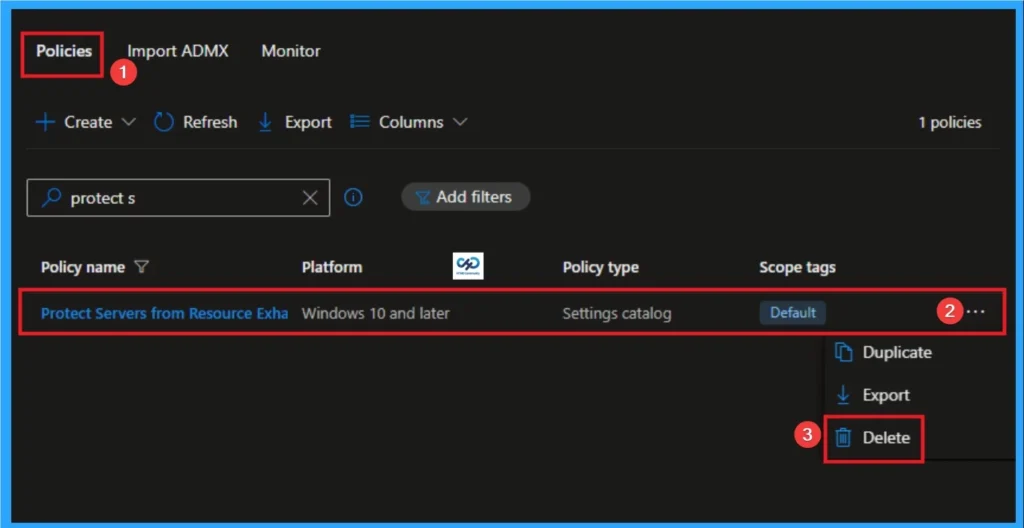
If you want to delete Assigned group from policy, can be from the Intune Portal. To do this, go to Policies in the Intune Portal and edit Tasks tab and Delete Policy.
To get more detailed information, you can refer to our previous post – Learn How to Delete or Unassign Apps from Intune using Step by Step Guide.
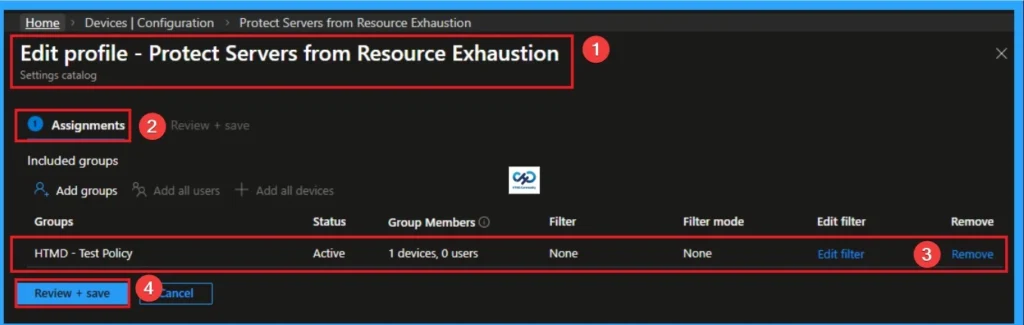
How to Remove Protect Server from Resource Exhaustion
You can easily delete Policies from Intun Portal. From Configuration section, you can delete the policy. This will remove it completely from the client device.
For more information, you can refer to our previous post – How to Remove Allow Clipboard History Policy in Intune Step by Step Guide.
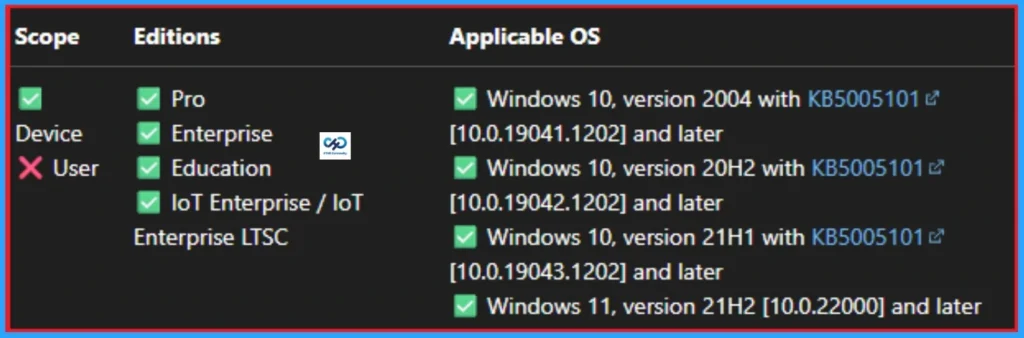
Windows CSP details
Determine execution level for Windows Resource Exhaustion Detection and Resolution. This policy setting only applies if extensive diagnostics Scenario execution policy is not configured. NO restart the system or a service restart is required for this policy to take effect: the changes will take effect immediately.
This policy setting will only take effect when Diagnostic Policy The service is running. When the service is stopped or disabled, the diagnostic scenario will not occur executed. DPS can be configured with Services enter to the Microsoft Management Console.
Need More Help or Have a Technical Question?
Join LinkedIn Page AndTelegram Group to get step by step guides and news updates. Join usMeeting Pageto participate in User group meetings. Also, JoinWhatsApp CommunityAndWhatsApp Channelto get the latest news about Microsoft Technologies. We were thereredditas well.
Author
Anoop C Nairhas been a Microsoft MVP for 10 consecutive years from 2015 onwards. He is a Workplace Solutions Architect with over 22+ years of experience in the Workplace technology space. He is a leader of the Community of Bloggers, Speakers, and Local User Groups. The main focus is on Device Management technologies such as SCCM and Intune. He writes about technologies like Intune, SCCM, Windows, Cloud PC, Windows, Entra, Microsoft Security, Career, etc.
News
Berita Teknologi
Berita Olahraga
Sports news
sports
Motivation
football prediction
technology
Berita Technologi
Berita Terkini
Tempat Wisata
News Flash
Football
Gaming
Game News
Gamers
Jasa Artikel
Jasa Backlink
Agen234
Agen234
Agen234
Resep
Cek Ongkir Cargo
Download Film


