Important Points
- Google Gemini is multimodal AI models and personal AI assistant.
- You can control Google Gemini Integration settings using aligned.
- Google Gemini serves as the foundation AI engine and conversation chat bot interface
- You can jump to Gemini application or website whenever you need help brainstorming, writing, or researching.
How to Configure Google Gemini Integration Setup using Microsoft Intune! courtesy of Google Chrome Generative AI settings in aligned allows administrators to centrally manage how AI-powered from Chrome feature works across enterprise devices. This arrangement is very important today An AI-driven era. Once the device is properly registered Microsoft Intune, administrators can enforce these policies seamlessly, ensuring compliance, security, and a consistent user experience across the organization.
List of contents
The Importance of Configuring Chrome GenAI Policies via Intune
Configuration Google Chrome GenAI settings via aligned important because it provides administrators with centralized control over how AI models are handled on managed devices. Through this policy, IT teams can control whether Chrome downloads and uses local foundations AI modelsenable or disable integrations like Gemini, and sync browsers AI capabilities with organizational compliance requirements.
This ensures compliance with the organization personal requirements, prevent unnecessary storage consumption, and align A.I use with companies government standard. Using Intune to deploy settings also simplifies management across large environments, allowing for consistent deployment security And show policy without manual intervention.
Disable Gemini Google Integration Settings
You may be able to enable or disable it Google Gemini Integration Settings using Microsoft Intune. Configuring it through Intune ensures consistent enforcement, supports compliance, and balances innovation with organizational privacy and performance standards.
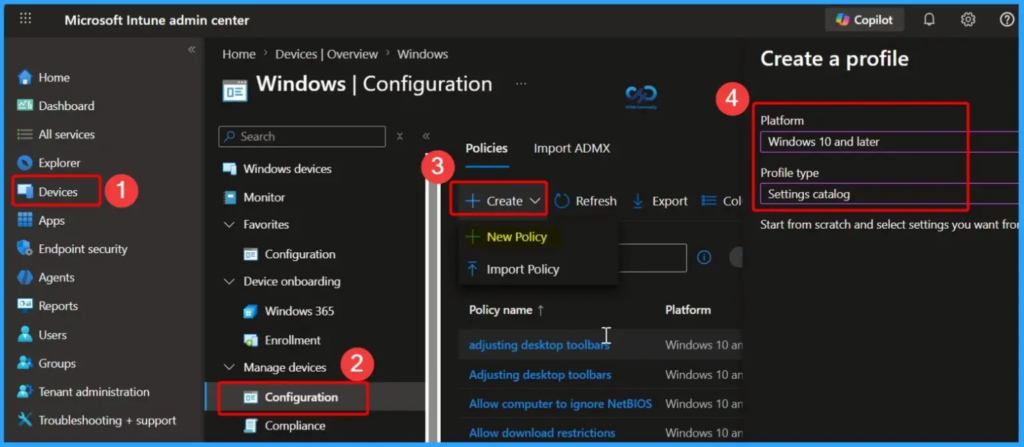
Under Platform, select it Windows 10 and later and under Profile type, select it Settings catalogue to go further. Click Make to go further.
When Create policies wizard opens, navigate to Basics tab and configure the necessary settings. Provide a unique and descriptive name for the policy in Name fields, and optionally add more details in Information field. Once this entry is complete, select it Next to continue the policy making process.
| Platforms | Profile type |
|---|---|
| Windows 10 and later | Settings catalogue |
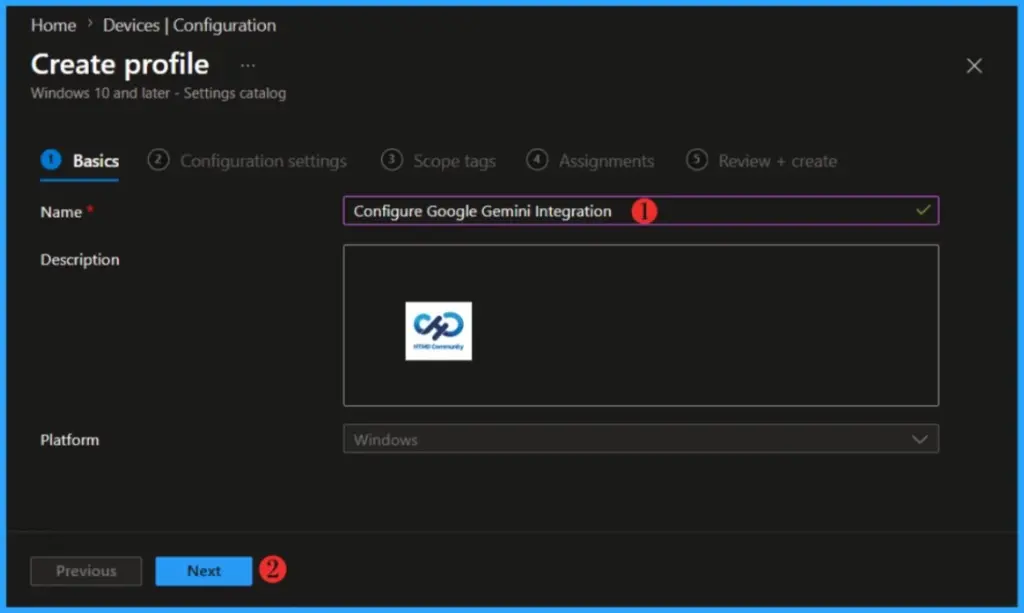
Click Next to go further. When you click NextYou will get Configuration Settings part. In Configuration Settings section, below Settings Catalogclick Add Settings. In the next tab, type “Gemini Integration” in the search box and click Look for. Choose Settings for Gemini integration.
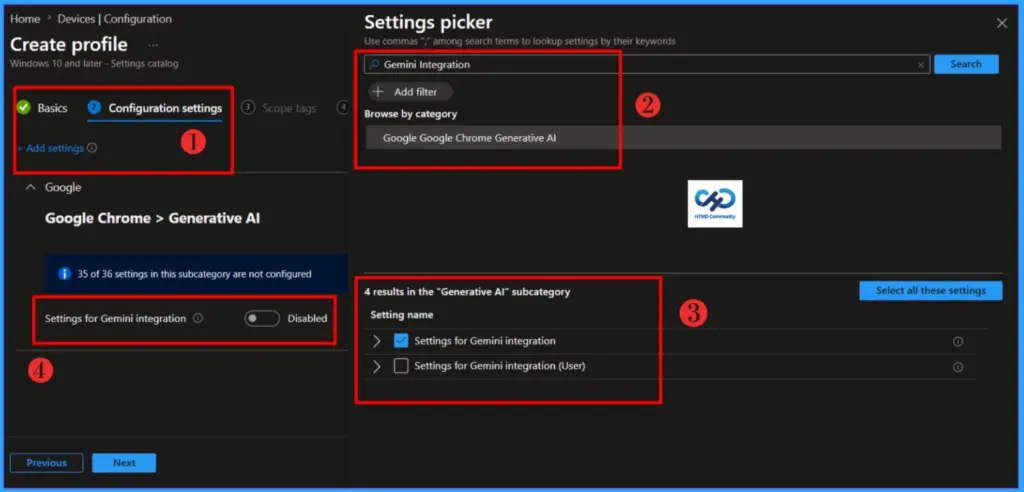
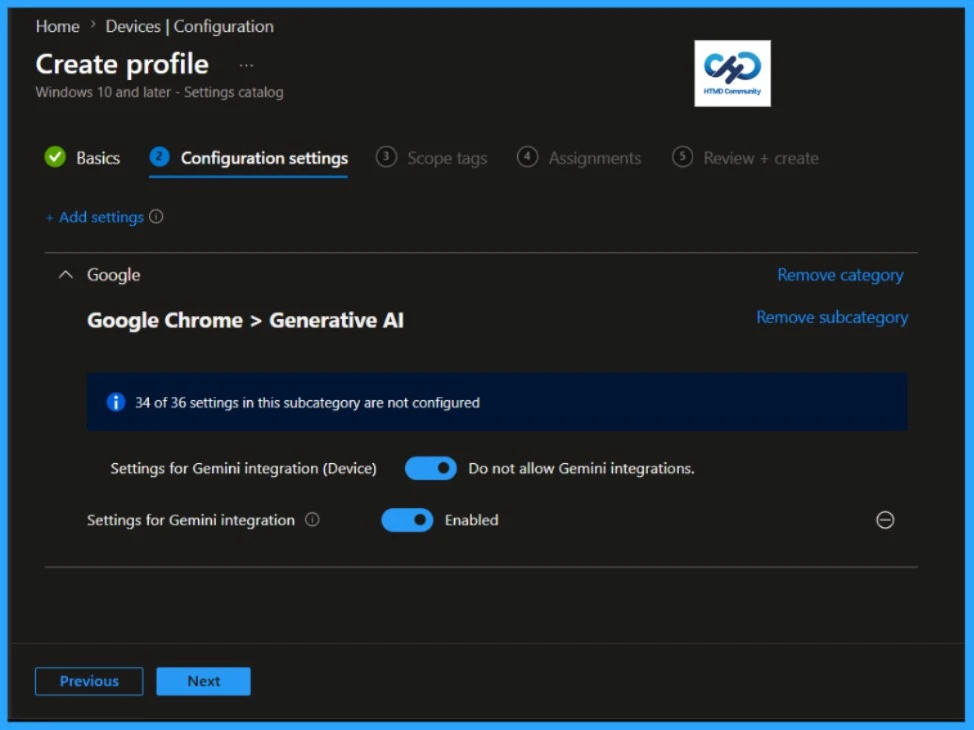
NOTE! Settings for Gemini integration allows Gemini app integrations. 0/unset = Gemini integration will be available for users. 1 = Gemini integration will not be available for users. If the policy is unset, its behavior is determined by the GenAiDefaultSettings policy. For more information, please check the Help Center article https://support.google.com/chrome/a?p=gemini_in_chrome.Activate Settings for Gemini integration. Very activatedYou will see the options ‘Settings for Gemini integration (Device).’ Toggle the switch and select Do not allow Gemini integration.
Click Next to display Coverage tag page. Add Coverage tag if you want, and click Next to assign policies to computers. I’ll pass it on to HTML Test Group Device Group.
Read more : Intune Scope Tags Implementation Guide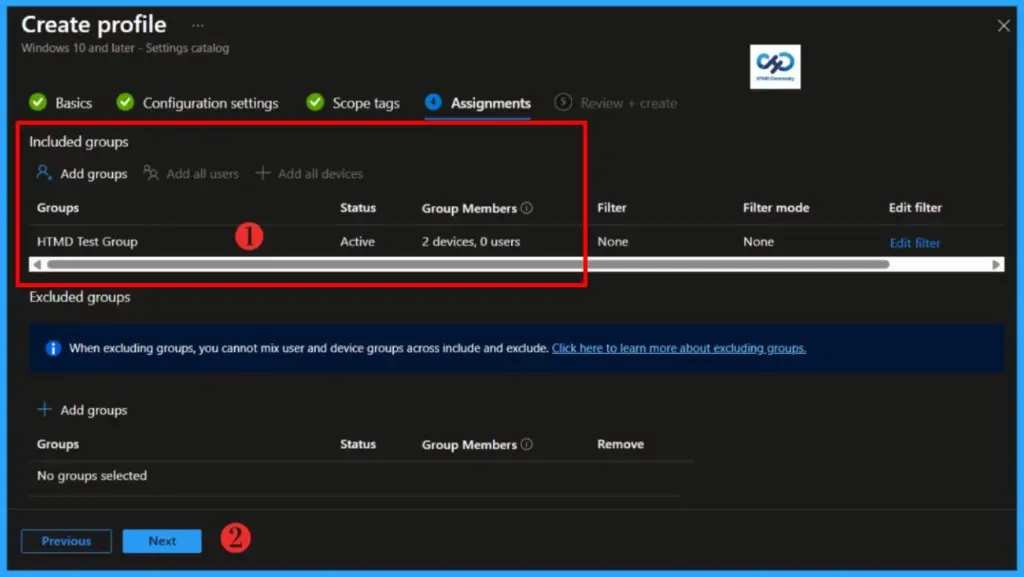
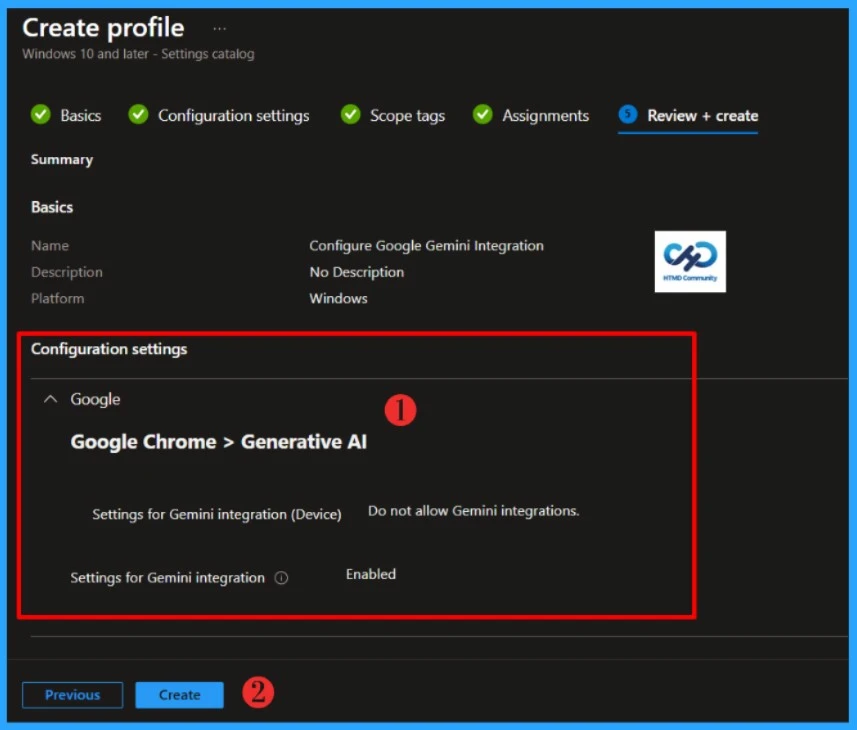
Please take a moment to carefully review all the settings you have set for Configure Google Gemini Integration Settings policy regarding “Review + Create” page. When you are ready, select “Make” to apply the changes.
Monitor Configuration Profile Deployment in Microsoft Intune
That Configuration Profile deployed to Microsoft Entra Group. Let’s see how we can monitor the deployment and installation status of aligned portal. To monitor aligned policy assignment, follow these steps:
- Navigate to the list Configuration and select policy You target.
- Check device And user check-in status from here.
- If you click “View Report,” you can see additional details.
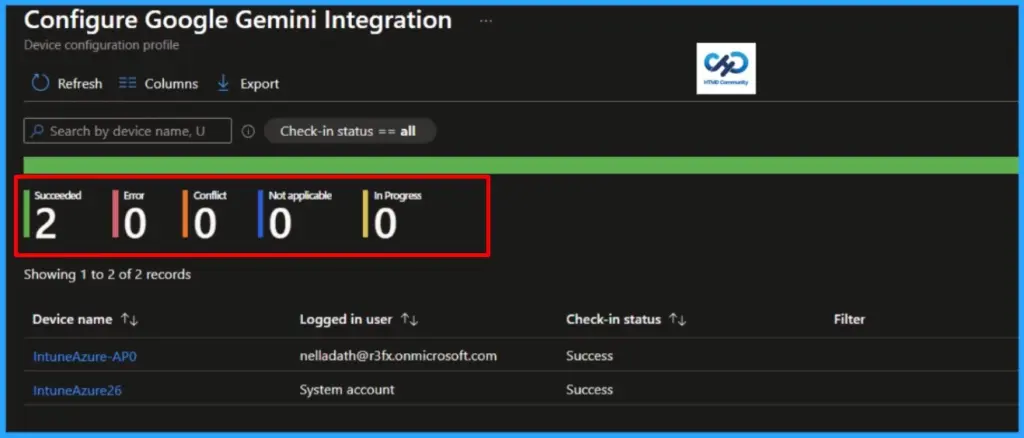
Event Log to Verify Intune Policy Deployment Status
o verify implementation success Network or Integers policy on Windows 10 or 11 device via alignedYou can utilize the event ID 813 And 814. This event ID provides valuable insight into the application status of the policy as well as the specific values assigned to the policy on the device.
In the case of this particular policy, the value is Network and linked to the event ID 813. Analyze this Event ID allows you to understand the policy enforcement status and associated values on the device in question.
To confirm this, check Event log path – Application and Service Logs – Microsoft – Windows – Device Management-Enterprise-Diagnostics-Provider – Admin.
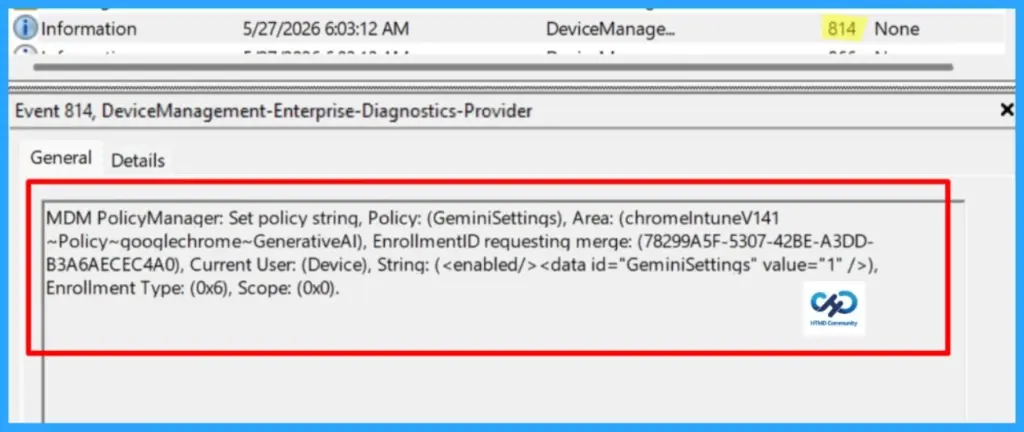
MDM PolicyManager: Set policy string, Policy: (GeminiSettings), Area: (chromeIntuneV141~Policy~googlechrome~GenerativeAI), EnrollmentID requesting merge: (78299A5F-5307-42BE-A3DD-B3A6AECEC4A0), Current User: (Device), String: (<enabled/><data id="GeminiSettings" value="1" />), Enrollment Type: (0x6), Scope: (0x0).I believe this article will be of significant benefit to you and your organization. I appreciate your patience in reading this post. I hope to see you in the next post. Keep supporting HTML Community.
Need More Help or Have a Technical Question?
Join LinkedIN Page And Telegram Group to get step by step guides and latest news updates. Join us Meeting Page to participate in User group meetings. Also, Join WhatsApp Community to get the latest news about Microsoft Technologies. We were there reddit as well.
Author
About the Author: Sujin Nelladath, A Microsoft Graphics MVP with over 13 years of experience in Intune device management and Automation solutions, writes and shares his experience with Microsoft device management technologies, Azure, DevOps, Graph API, and PowerShell automation.
PakarPBN
A Private Blog Network (PBN) is a collection of websites that are controlled by a single individual or organization and used primarily to build backlinks to a “money site” in order to influence its ranking in search engines such as Google. The core idea behind a PBN is based on the importance of backlinks in Google’s ranking algorithm. Since Google views backlinks as signals of authority and trust, some website owners attempt to artificially create these signals through a controlled network of sites.
In a typical PBN setup, the owner acquires expired or aged domains that already have existing authority, backlinks, and history. These domains are rebuilt with new content and hosted separately, often using different IP addresses, hosting providers, themes, and ownership details to make them appear unrelated. Within the content published on these sites, links are strategically placed that point to the main website the owner wants to rank higher. By doing this, the owner attempts to pass link equity (also known as “link juice”) from the PBN sites to the target website.
The purpose of a PBN is to give the impression that the target website is naturally earning links from multiple independent sources. If done effectively, this can temporarily improve keyword rankings, increase organic visibility, and drive more traffic from search results.