
Let’s discuss How to Automate Windows Update Reboot Time with Intune. Scheduled Install Day Policy settings are part of The update is ringing for Windows 10 and later policies in Microsoft Intune. This allows administrators to determine day of the week When automatic scheduled reboot for Windows quality (monthly) and feature (semi-annual) updates will occur.
The function of this policy is to Determine the days of the week when updates are installed automatically and the device performs a scheduled reboot to complete installation if no user is present. When a Windows Update (quality or feature) is available, Windows Download it’s in the background. Installation of updates may occur automatically.
If the device is configured to use these settings, Windows will attempt a final installation and a mandatory reboot during the process Scheduled Installation Time on the specified Scheduled Installation Day (for example, 03.00 every Sunday). If the device is being actively used by the user, Windows will usually prompt the user with a notification and attempt to honor it Active Hours before performing a scheduled mandatory reboot.
By enabling this setting, admins can minimize user disruption. By setting the installation day to an outside peak hours time like Sunday at 03.00 IT ensures necessary reboots occur when virtualy no users are working, thus preventing unexpected events reboot in the middle of the working day.
How to Automate Daily Windows Update Reboots with Intune
Allows IT admins to schedule update installation days. The data type is a integers. With this policy in Intune, you can determine the day installation update that is convenient for your organization.
Sign in with the Intune Portal
As an Admin, you can easily configure this policy on your tenant. For this Sign in to the Microsoft Intune Portal with Credentials. Navigate to Device > Configuration > + Create > New Policy
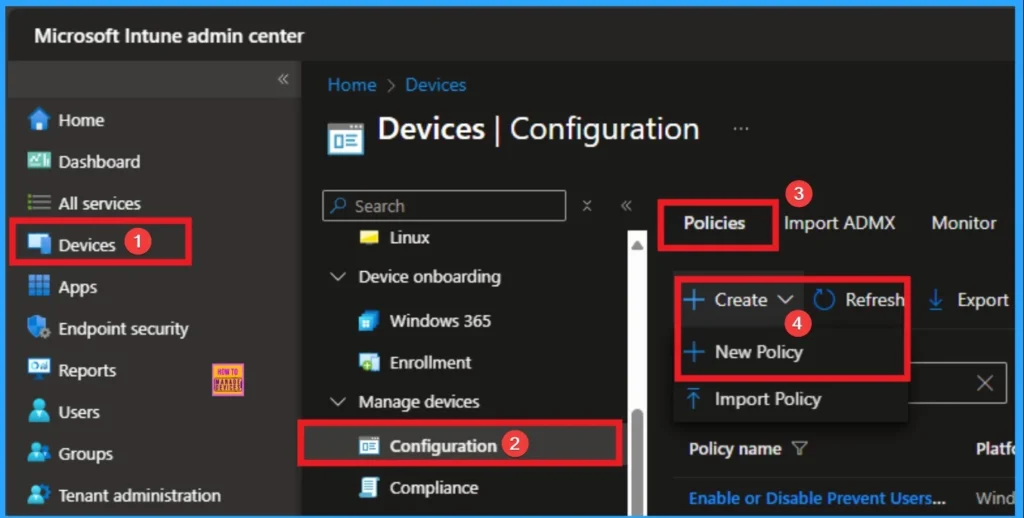
Profile Selection Steps
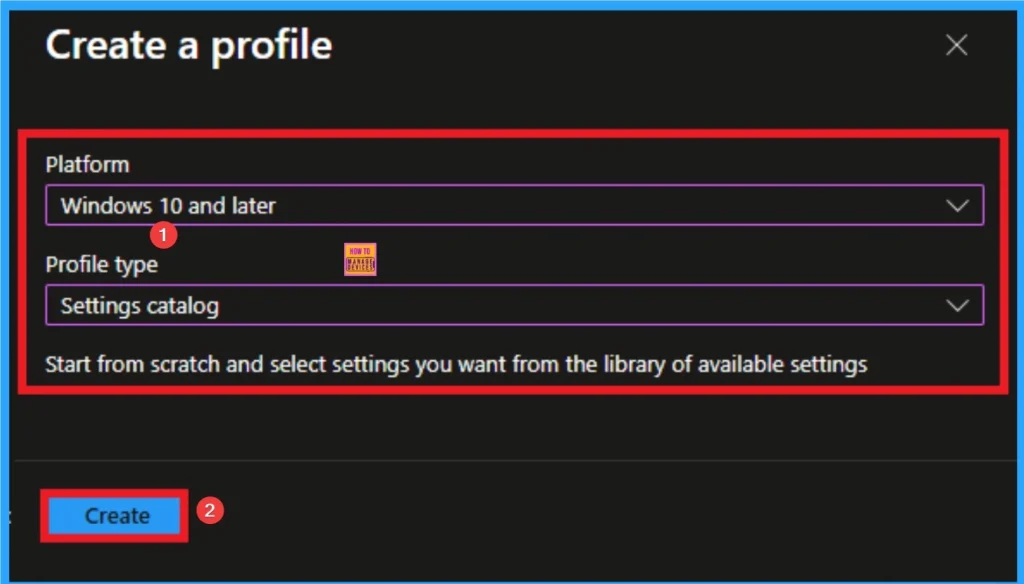
After that you can choose the appropriate one platform and profile type. This is an important step for policy creation and you cannot change the profile and platform after creating the profile. Here I want to configure the policy to be Windows 10 and newer platform catalog profiles and settings. Then click on Make knob.
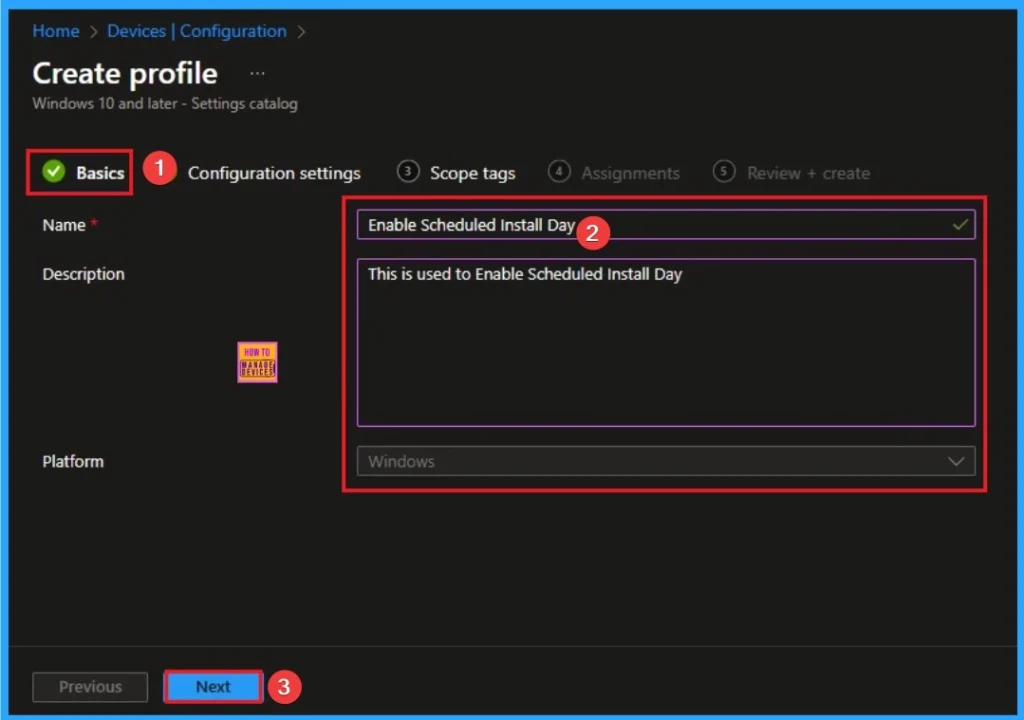
Start the Policy with the Basic Tab
Basic Tab is the first tab that helps users provide identities for policies. For this, you can add a Name and description for the settings you want to select for policy creation. This is his name must And information is optional. After adding this click on Next knob.
Configure Enterprise Proxy Server Policy
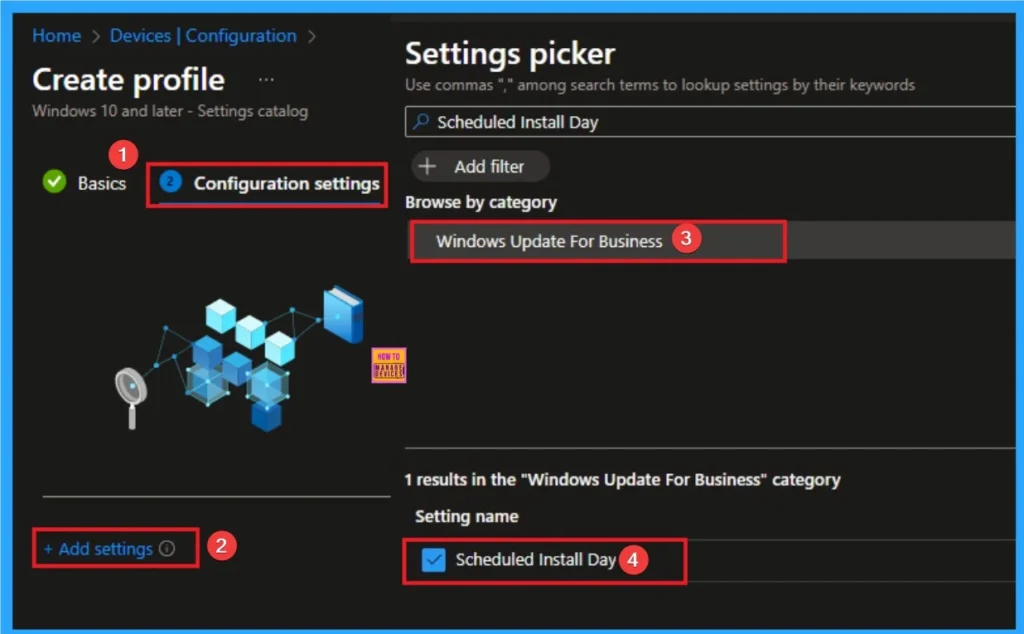
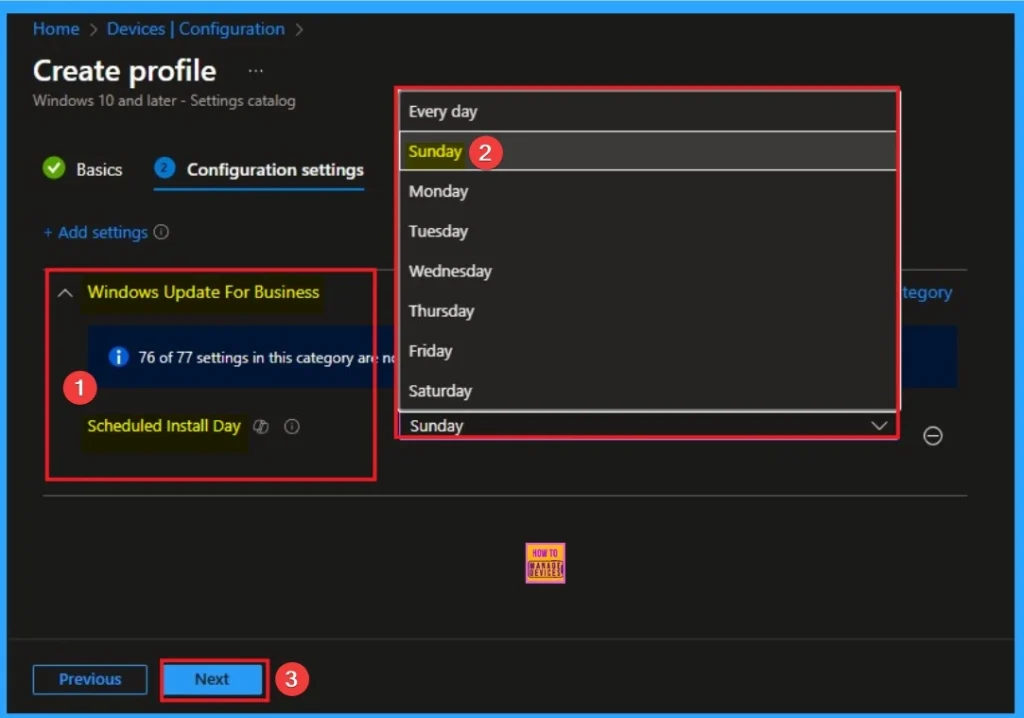
After that you will get Configuration settings tab which helps you access certain settings. To get the settings, click on +Add settings hyperlink and select a specific setting from the Settings Picker. Here, I want to select settings by browsing by Category. I choose Windows Update For Business. Then, I choose Scheduled Installation Day arrangement.
Add Value
To determine the days for the Update Installation you have 7 days like Sunday to Monday. Here I want to choose Sunday for Update Installation which is the most common choice for company devices. Because, Sunday night/Monday morning is the time lowest usage time for most businesses, ensuring devices are ready before the work week begins.
Added Scope Tag
Scope Tag is not a mandatory step in policy making. However you can add a Scope tag for visibility restrictions. Here, I didn’t add the scope tag for Company IP Range Policy. Click on Next knob.

Select Groups from the Assignments Tab
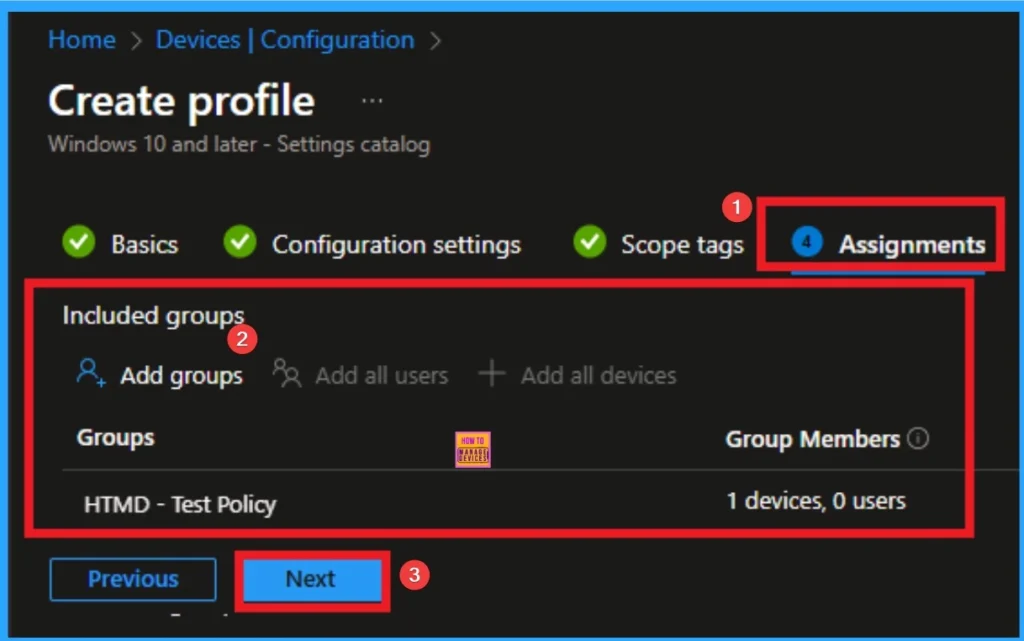
To assign policies to specific groups, you can use Tasks Tab. Here I click, +Add group option under Included groups. I select a group from the group list and click Choose knob. Again, I click on Choose button to continue.
Review + Create
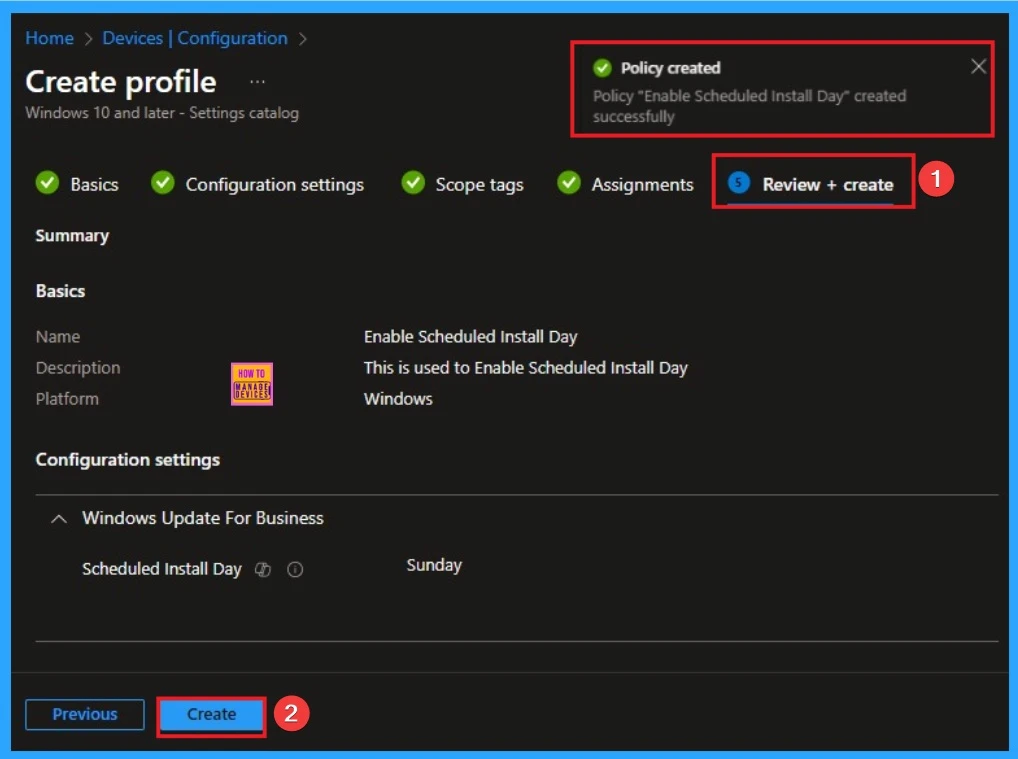
Review + Create tab is the final step of policy creation. In this tab, you can verify every detail of the policies added in previous step (basic configuration settings, scope tag assignment, etc). If you want to make changes, click the previous button; if not, you can click on it Make knob.
Device Check-in Status
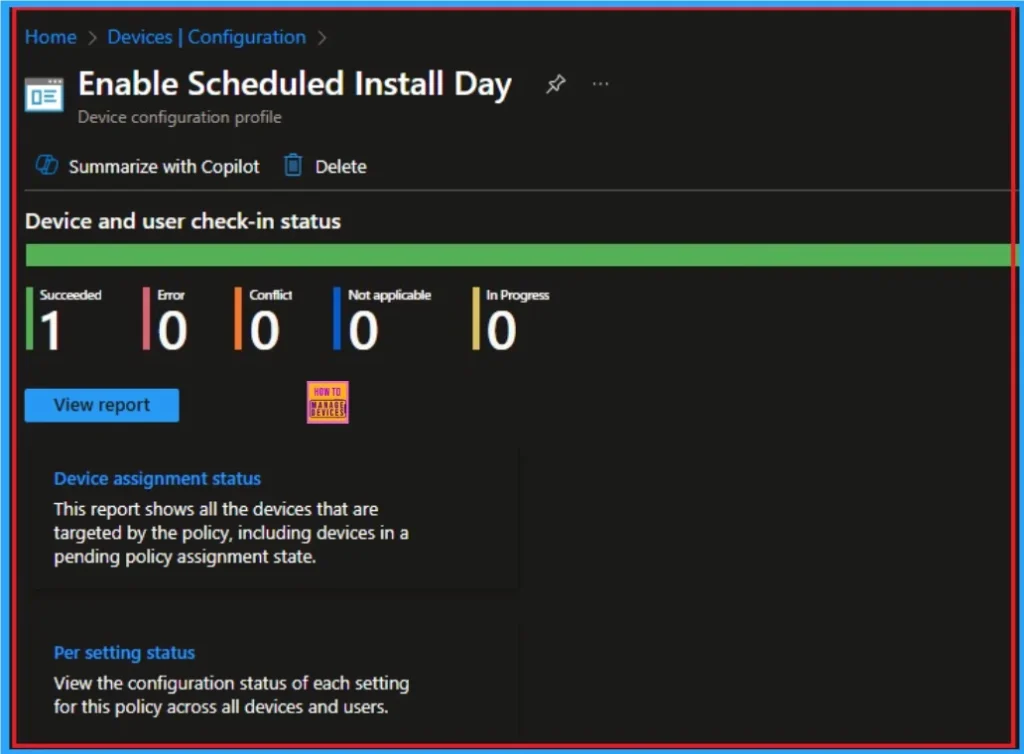
The Device Check-in Status page shows whether the Policy was successful or Not. Before checking this, you can sync devices in the Enterprise Portal for faster policy enforcement. Then Go to Device > Configuration > Search Policies. Here, the policy is shown as succeed.
Client Side Verification
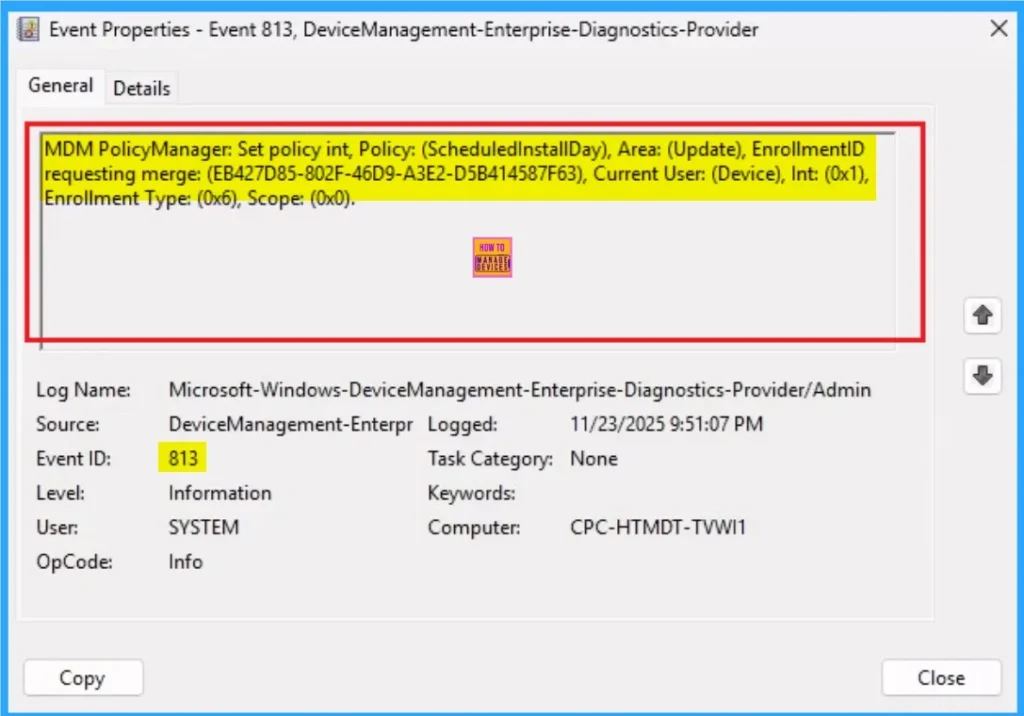
This helps you check the client side and verify the policy status. Go to the Client device and open the Event Viewer. Go to Start > Event Viewer. Navigate to Logs: In the left pane, open Application and Service Logs > Microsoft > Windows > Enterprise-Device Management-Diagnostics Provider > Admin.
MDM Policy Manager: Set policy into, Policy: (Scheduled Installation Day), Area: (Update), Registration ID
request merge: (EB427D85-802F-46D9-A3E2-D5B414587F63), Current User: (Device), Int: (0x1),
Registration Type: (0x6). Scope: (0x0).
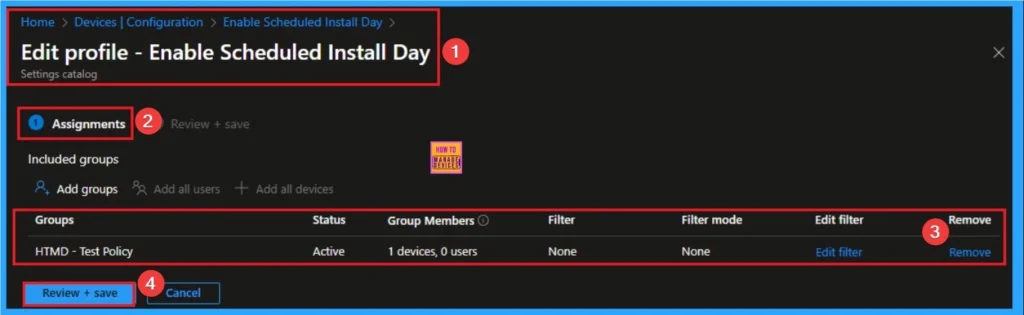
Delete an Assigned Group from Scheduled Install Day Policy Settings
If you want to delete Assigned group from policy, can be from the Intune Portal. To do this, go to Policies in the Intune Portal and edit Tasks tab and Delete Policy.
To get more detailed information, you can refer to our previous post – Learn How to Delete or Unassign Apps from Intune using Step by Step Guide.
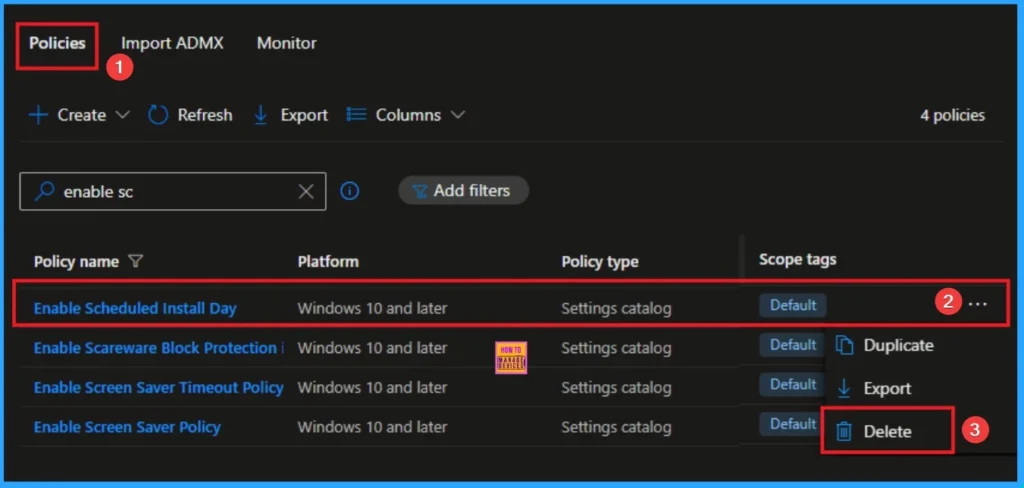
How to Remove Scheduled Install Day Policy
You can easily delete Policies from Intun Portal. From Configuration section, you can delete the policy. This will remove it completely from the client device.
For more information, you can refer to our previous post – How to Remove Allow Clipboard History Policy in Intune Step by Step Guide.
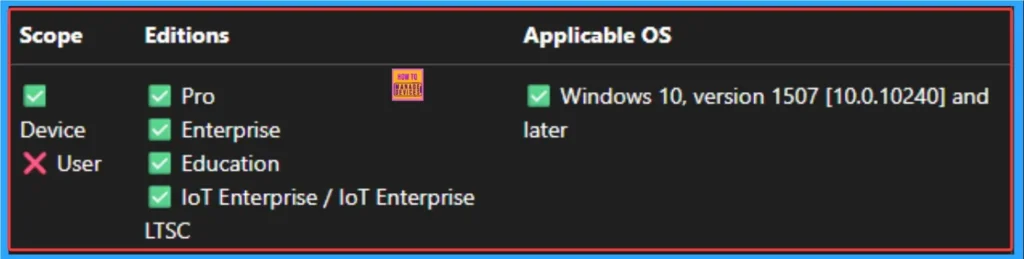
Windows CSP details
Scheduled Installation Day Policy applies to Windows 10version 1507 [10.0.10240] and then. This policy will only apply if Update/AllowAutoUpdate has been configured to option 3 or 4 for scheduled installations.
| Mark | Information |
|---|---|
| 0 (Default) | Every day. |
| 1 | Sunday. |
| 2 | Monday. |
| 3 | Tuesday. |
| 4 | Wednesday. |
| 5 | Thursday. |
| 6 | Friday. |
| 7 | Saturday. |
Need More Help or Have a Technical Question?
JoinLinkedIn page AndTelegram Groupto get step by step guides and news updates. Join usmeEtup pageto participate in User group meetings. Also, JoinWhatsApp CommunicationNityto get the latest news about Microsoft Technologies. We were thereredditas well.
Author
Anoop C Nairhas been a Microsoft MVP for 10 consecutive years from 2015 onwards. He is a Workplace Solutions Architect with over 22+ years of experience in the Workplace technology space. He is a leader of the Community of Bloggers, Speakers, and Local User Groups. The main focus is on Device Management technologies such as SCCM and Intune. He writes about technologies like Intune, SCCM, Windows, Cloud PC, Windows, Entra, Microsoft Security, Career, etc.
News
Berita Teknologi
Berita Olahraga
Sports news
sports
Motivation
football prediction
technology
Berita Technologi
Berita Terkini
Tempat Wisata
News Flash
Football
Gaming
Game News
Gamers
Jasa Artikel
Jasa Backlink
Agen234
Agen234
Agen234
Resep
Cek Ongkir Cargo
Download Film


