
Today we discussed how to Enable or Disable All Balloon Notifications in Taskbar using Intune Policy. This setting is designed to help administrators control whether users receive pop-ups notification message in the system taskbar area. Notification balloons are typically used to notify users of system events, updates, or reminders, but in some cases environmentthis may not be necessary or bother.
This policy setting allows administrators to disable everything completely announcement balloon on the user’s device. If this policy is enabled, users will no longer see any pop-up messages that appear in the notification area. This ensures that the desktop environment focused, especially beneficial in a professional or shared computer setting.
If this policy is enabled, it does not display all types announcement balloons that usually appear for system or application events. This means warnings like renew reminders, alerts, or network notifications will not be present is displayed to users. This creates a distraction-free workspace and helps maintain a consistent user experience across all aspects managed devices.
If the policy is disabled or not configuredthe system continues to display notifications balloon as usual. Users will see pop-ups about various events, such as software installation, updates, or connectivity issues. This is useful in environments where users need the system immediately input or warning notifications to take timely action.
How does this Policy Benefit the Organization?
Turn off all balloon notification policy assistance organization maintain a distraction-free and professional desktop environment. In a workplace where employees need to stay focused, frequent pop-up notifications can disrupt workflow and reduce productivity.
Enable or Disable All Balloon Notifications in Taskbar using Intune Policies
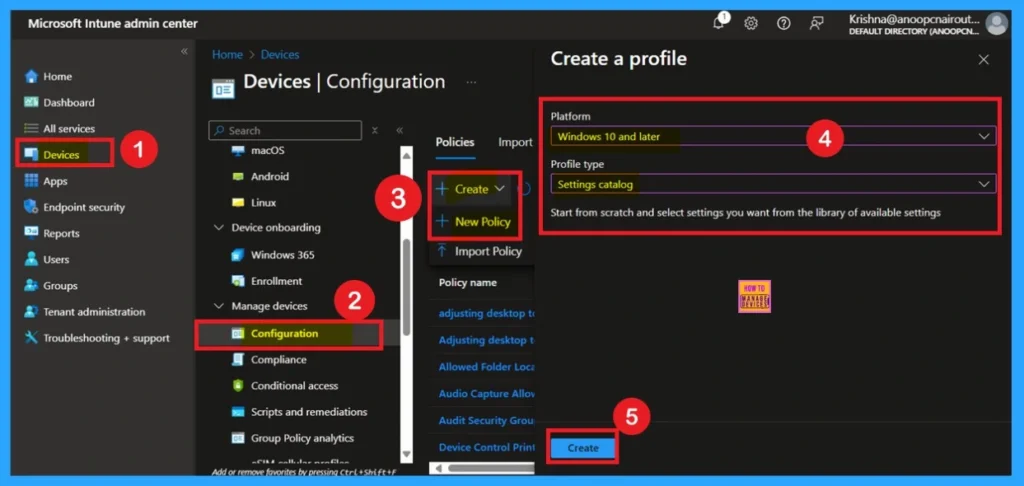
Now, let’s follow the steps to implement this policy aligned. First, log in Microsoft Intune Admin Center with you credentials. Then, navigate to Device > Configuration > Policies and click Create Policy. Next, you will see the Create Profile window. Here, you need to set up a profile for your deployment. Select Platform as Windows 10 and above and select Profile type as Settings Catalog. After that, click Create to continue.
What is Basic Tab
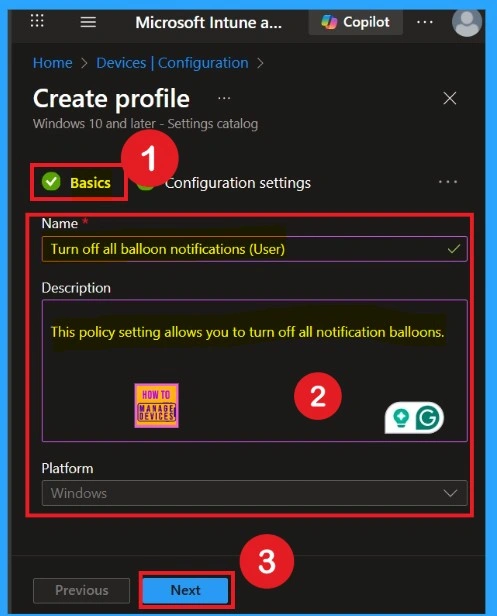
The first step is basics tab, where you need to enter important details for the policy, like Name, InformationAnd Platforms information. The platform is already set to window by default. Just provide a meaningful name and brief description for the policy, then click Next to continue.
Configuration Settings – Settings Selector
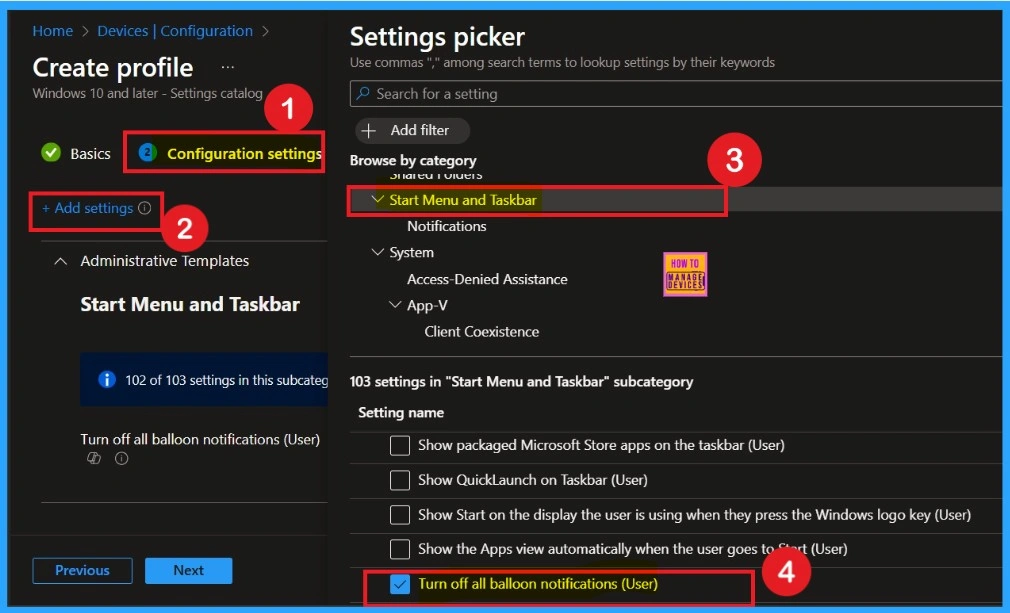
The next step is Configuration Settings. In this section, click Add Settings to start adding the required policy configurations. Once the settings selector window appears, navigate to Administrative Templates. Expand this category to see more options, then select Start Menu and Taskbar. In this category, you will see a list of available policies. From the list, search for and select the policy name “Turn off all balloon notifications.”
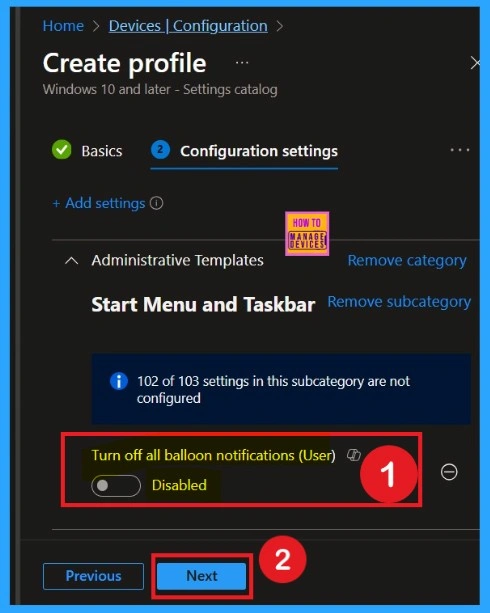
Default Disable Mode
If you want disabled policy, pull the button from right to left. In this mode, the toggle will turn gray, and its status will display as Disabled. This means that the policy will not be implemented user. You can then click Next to continue in disabled mode.
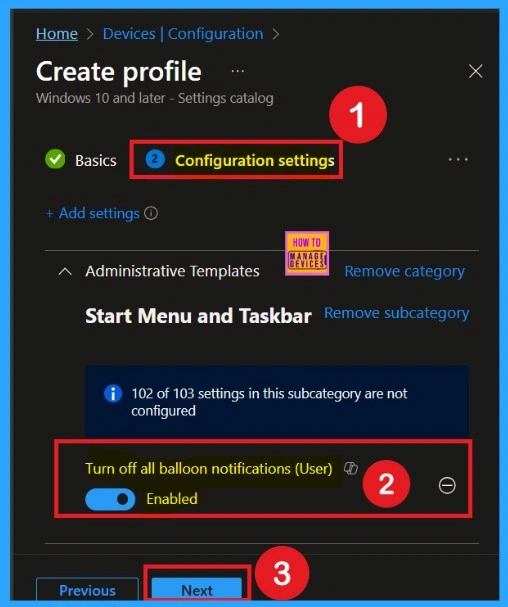
Enable Policy
You can also enable policies that are disabled by default. To do this, switch the buttons from left to right. Once activated, the switch will turn blue and display a label Enabled. There are several benefits to enabling this policy. This increases user productivity by reducing distractions and prevention sensitive notifications from being seen by invalid individual.
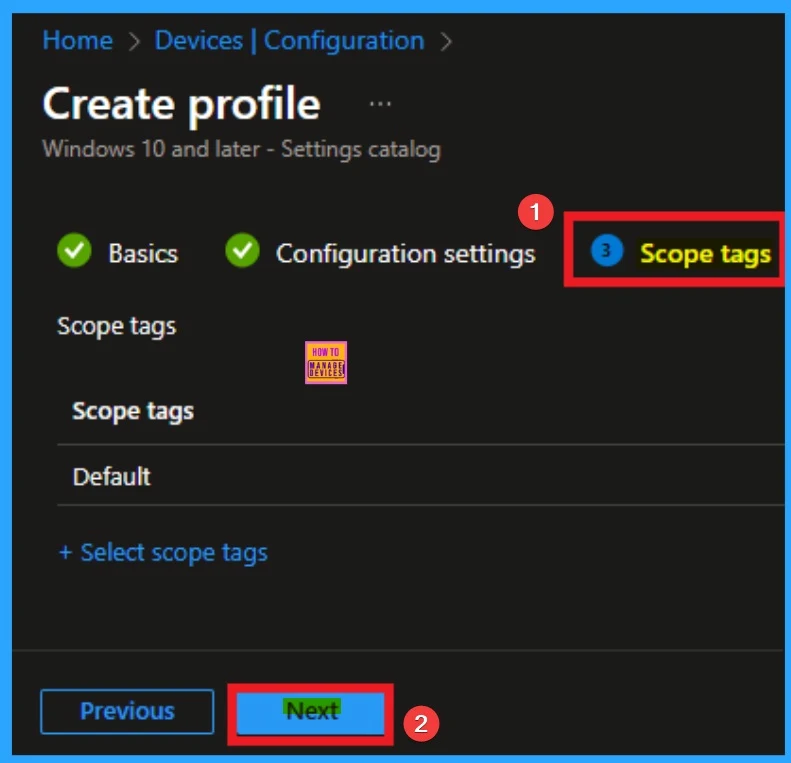
Now you are in the Coverage tags section. Coverage tag used to assign policies to specific admin groups for better management and filtering. If needed, you can add scope tags here. However, for this policy, I voted for it pass this part.
What is Task
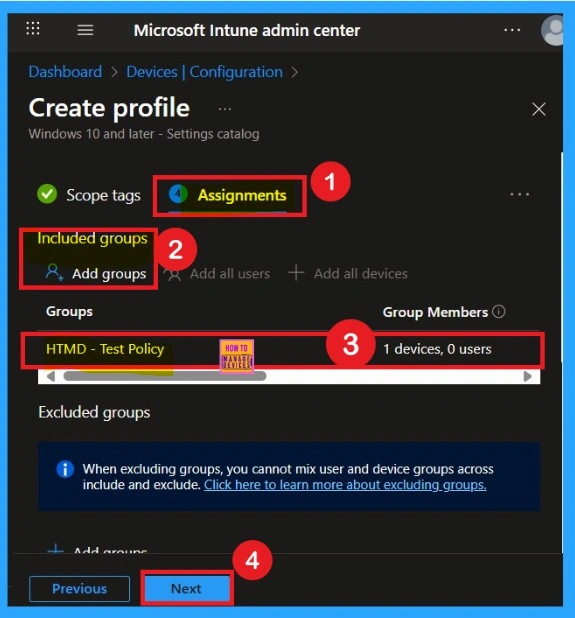
To assign policies to specific groups, you can use Tasks Tab. Here I click, +Add group option under Included groups. I select a group from the group list and click Choose knob. Again, I click on Choose button to continue.
Review + Create
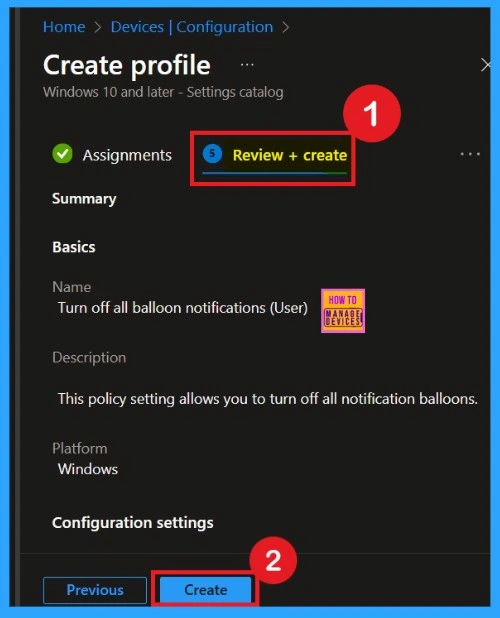
Before completing policy creation, you can review every tab to avoid configuration error or weaker policies. This tab functions as a summary page. After verifying all the details, click Make Knob. After creating the policy, you will get a success message.
Monitoring Status
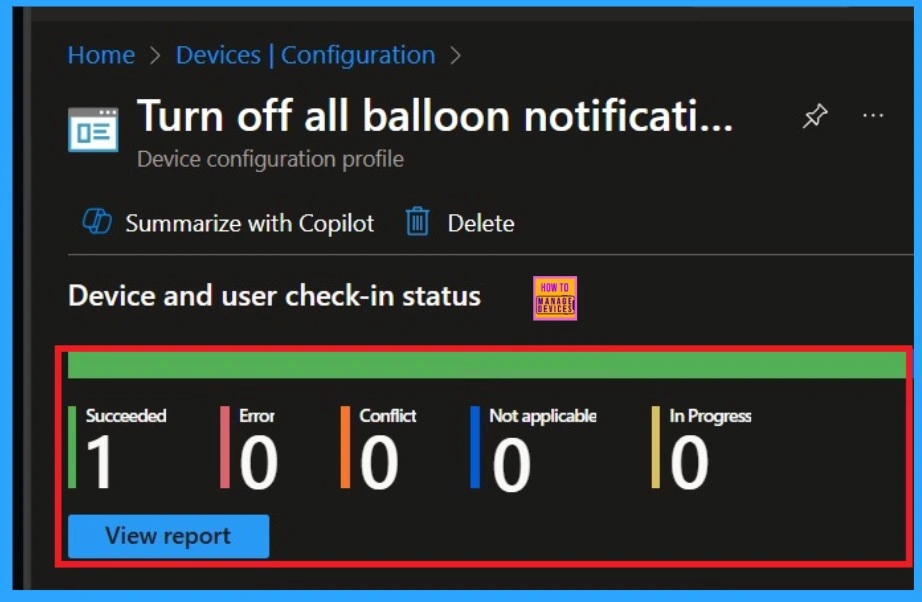
That Monitoring Status the page shows whether the policy was successful or not. o quickly configure policies and leverage device policy synchronization defined in the Enterprise Portal. Open the Intune Portal. Go to Devices > Configuration > Search Policies. Here, the policy is shown as succeed.
Client Side Verification via Event Viewer
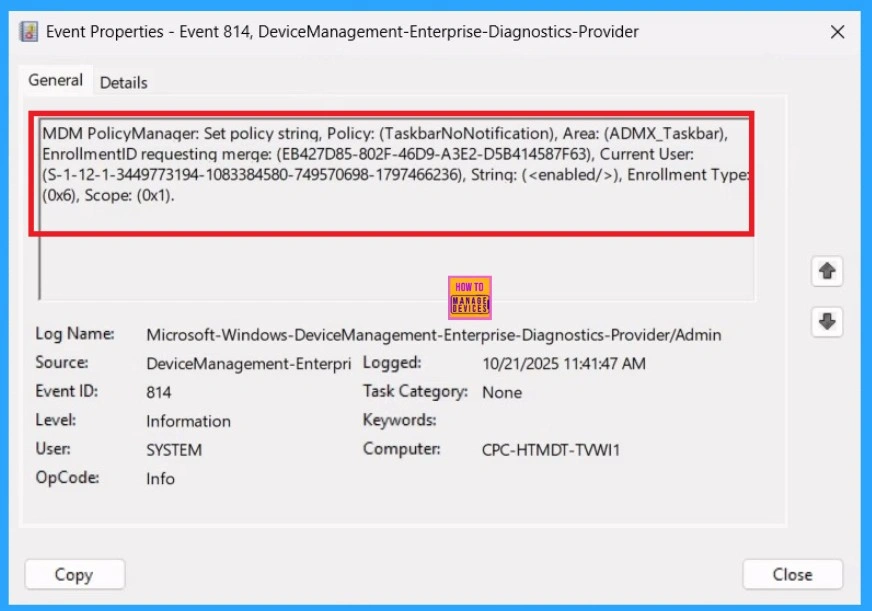
To make sure the policy is successful or not, you can use Event Viewer. First, open Event Viewer and navigate to Application and Service Logs > Microsoft > window > Device Management > Enterprise Diagnostic Provider > Admin. Look for Event ID 813 or 814because this is usually policy-related information.
- You can use Current Log Filter option in the right-hand panel to get the results easily.
- Below this screenshot policy details are found under Event ID 814.
| Policy Info |
|---|
| MDM Policy Manager: Set policy string, Policy: (TaskbarNo Notifications), Region: (ADMX_Taskbar), Registration ID requesting the brand: (EB427D85-802F-46D9-A3E2-D5B414587F63), Current User: (S-1-12-1-3449773194-1083384580-749570698-1797466236), Strinq: ()Registration Type (0x6), Scope: (0x1). |
Delete an Assigned Group from this setting
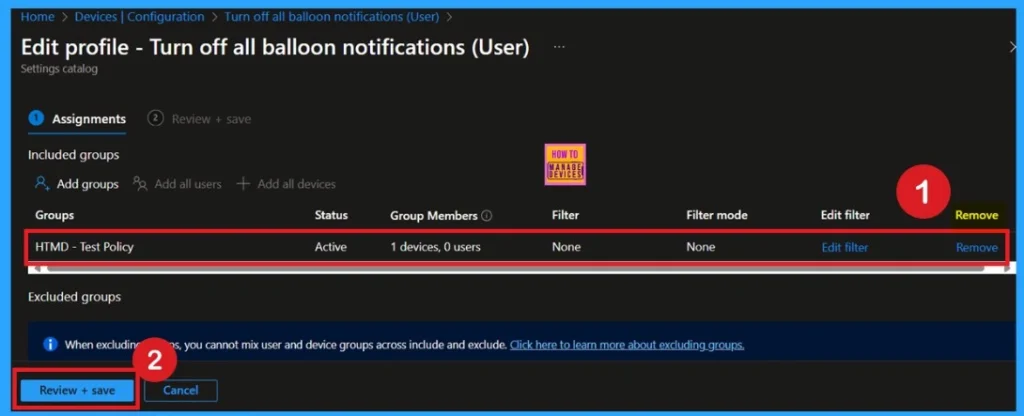
If you want to remove an Assigned group from a policy, this can be done from the Intune Portal. To do this, go to Policies in the Intune Portal and edit Tasks tab and Delete Policy.
For more information, you can refer to our previous post – Learn How to Delete or Unassign Apps from Intune using Step by Step Guide.
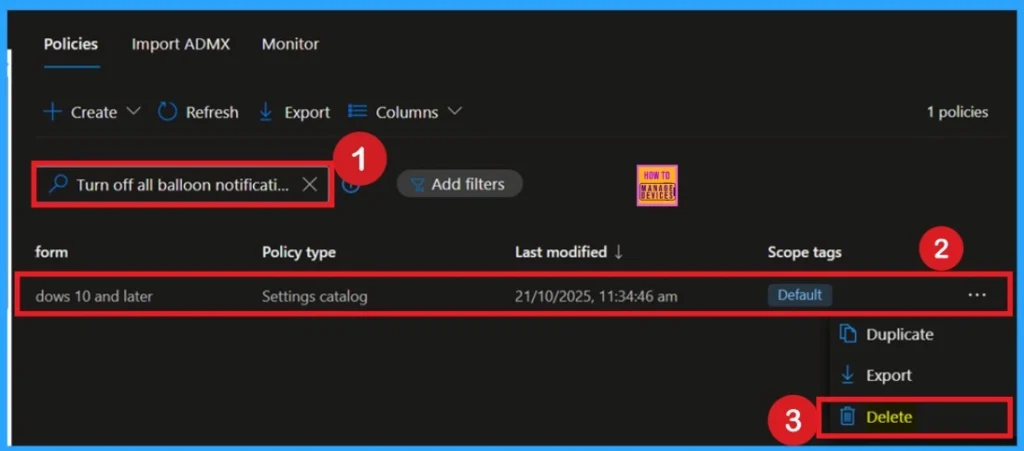
How to Delete a Policy You Created
To delete a policy in Microsoft Intune, first go to Microsoft Intune Admin Center. Navigate to Devices and select it Configuration. Search for and select the specific policy you want delete. Once you are on the policy details page, click 3 -dot menu in the top right corner and select Delete from the available options.
For more information, you can refer to our previous post – How to Remove Allow Clipboard History Policy in Intune Step by Step Guide.
Need More Help or Have a Technical Question?
JoinLinkedIn Page AndTelegram Groupto get step by step guides and latest news updates. Join usMeeting Pageto participate in User group meetings. Also, join inWhatsApp Communityto get the latest news about Microsoft Technologies. We were thereredditas well.
Author
Anoop C Nairhas been a Microsoft MVP for 10 consecutive years from 2015 onwards. He is a Workplace Solutions Architect with over 22+ years of experience in the Workplace technology space. He is a leader of the Community of Bloggers, Speakers, and Local User Groups. The main focus is on Device Management technologies such as SCCM and Intune. He writes about technologies like Intune, SCCM, Windows, Cloud PC, Windows, Entra, Microsoft Security, Career, etc.
Game Center
Game News
Review Film
Berita Olahraga
Lowongan Kerja
Berita Terkini
Berita Terbaru
Berita Teknologi
Seputar Teknologi
Berita Politik
Resep Masakan
Pendidikan
Berita Terkini
Berita Terkini
Berita Terkini
review anime
Gaming Center
Originally posted 2025-10-30 12:23:29.


